Customer goods kept separate
Customer goods are tracked on separate records; they do not count towards your stock value.
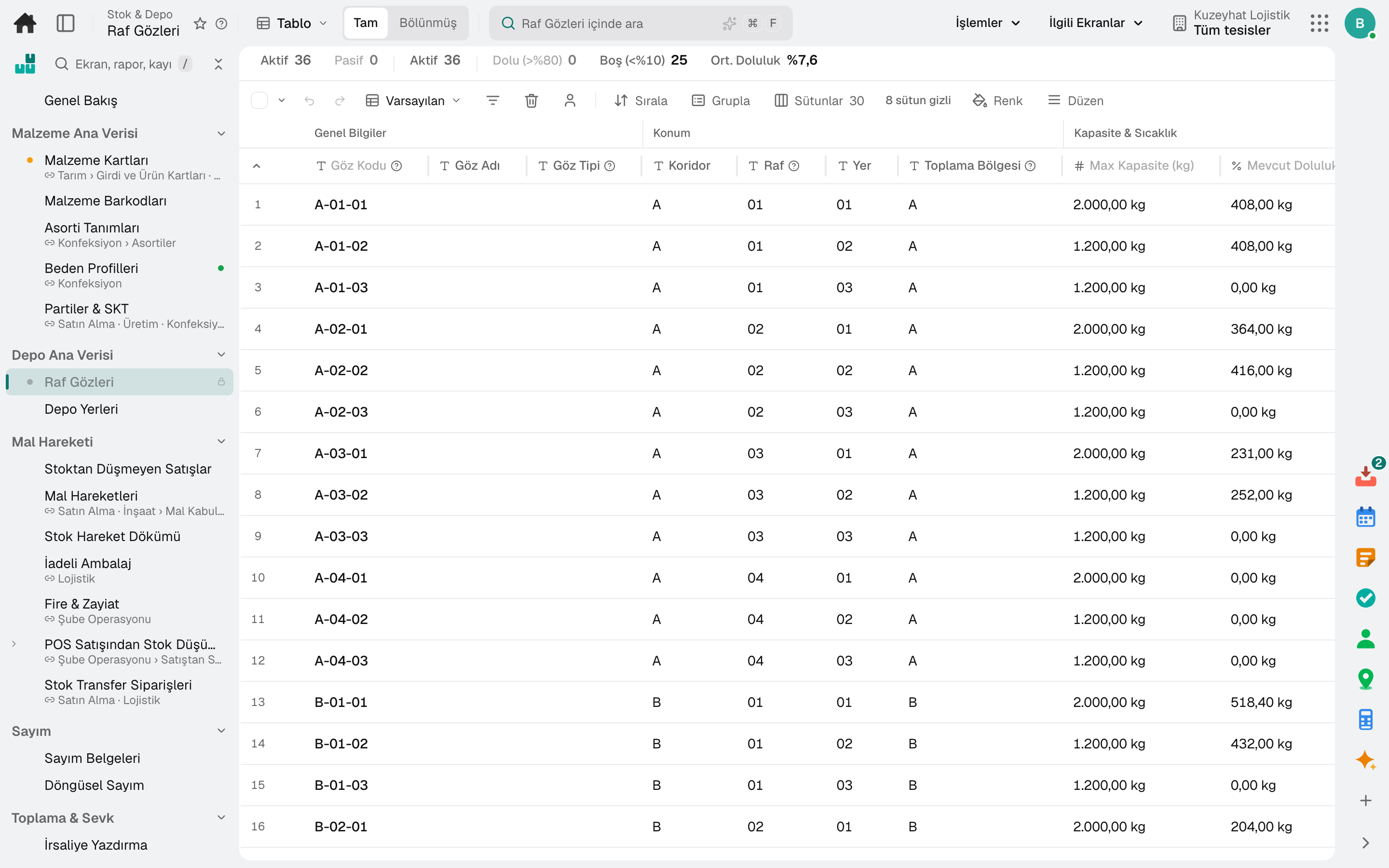
For the customers whose goods you store: a warehouse with bin locations, putaway and picking tasks, RF terminal, pallet labels, dock appointments and warehousing invoices with pallet-day tariffs.
Other lines of business: Urban distribution · Freight brokerage · Cold chain transport
Contract warehousing
Customer goods are tracked on separate records; they do not count towards your stock value.
Bins are generated in bulk from aisle, rack and level ranges; capacity is defined by weight, volume and pallets.
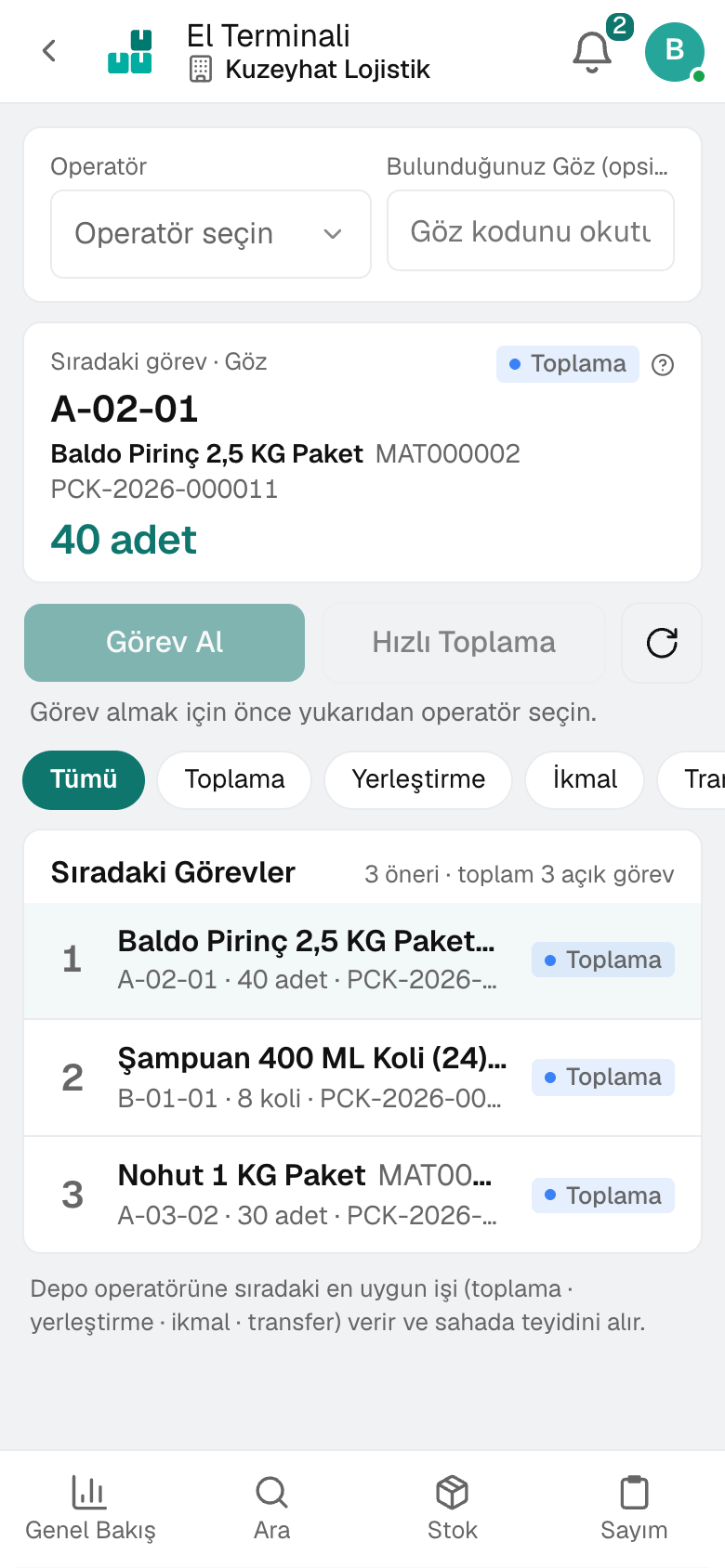
Operators are given the best next job; picking, putaway, replenishment and transfers are confirmed on the floor.
Deliveries are grouped into waves; a released wave creates the picking tasks.
Dock appointments are given for loading and unloading; a full time slot takes no new appointments.
Pallet × day, m³ × day, goods receipt and goods issue tariffs; at month end a draft invoice is created per contract.
A day
A delivery is created from the sales order; a delivery without a trip waits on the dispatch board.
The wave is released; the operator confirms the picking task on the RF terminal and the goods are packed.
The job is assigned to a driver; once the trip is confirmed, the loading list goes to the vehicle.
The vehicle's location and the driver's driving time are tracked; delays and temperature breaches land in the TM Alert Centre.
The driver closes the delivery with a signature and photo and records the cash on delivery; the money is handed in to the cash desk at the end of the day.
Delivery performance is updated per driver, and the carrier scorecard by on-time delivery and cost.
Frequently asked
No. Customer goods are tracked on separate records and are not valued in your books.
Yes. Extra charges such as labelling, palletising and overtime are added to the period invoice as lines.
Try it free for 15 days; no credit card needed. We reply to your questions within one business day.