Unassigned work on one screen
Deliveries without a trip and trips without a driver are on the board; a job is assigned to a driver in one click and added to the driver's trip that has not yet departed, or a new trip is opened.
For companies that haul with their own fleet, work with carriers and run warehouses: fleet and drivers, freight orders and shipping, dispatch board, vehicle and carrier tracking, carrier tendering and invoices, bin-managed warehouse, warehousing service invoices and dock appointments on the same data.
01 / 08
Deliveries without a trip, trips without a driver and drivers on shift on one screen. Jobs are assigned to drivers, trips are planned with their stops, and what goes on the vehicle lands on the loading list.
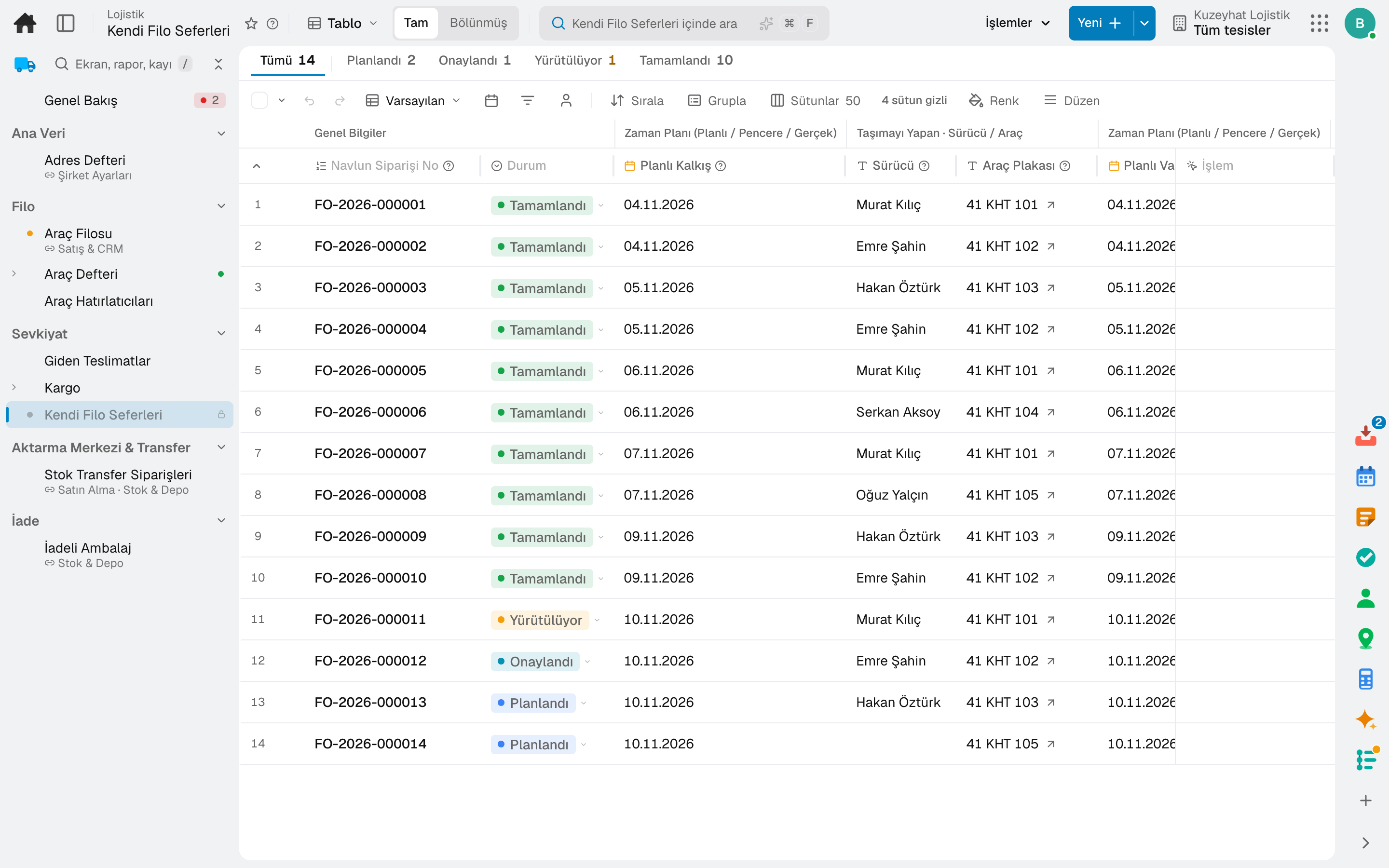
Deliveries without a trip and trips without a driver are on the board; a job is assigned to a driver in one click and added to the driver's trip that has not yet departed, or a new trip is opened.
A trip is planned with its stops; vehicle, driver and seal are on the trip, and the trip is run in the field.
Once a trip is confirmed, the deliveries to load land on the loading list automatically; loading is started and completed.
A route is defined by site, transport zone, trip days, transit time, order cut-off time and delivery window; a delivery finds its route automatically.
The substance record holds the UN number, class, packing group and tunnel code; the ADR transport document and instructions in writing are printed.
02 / 08
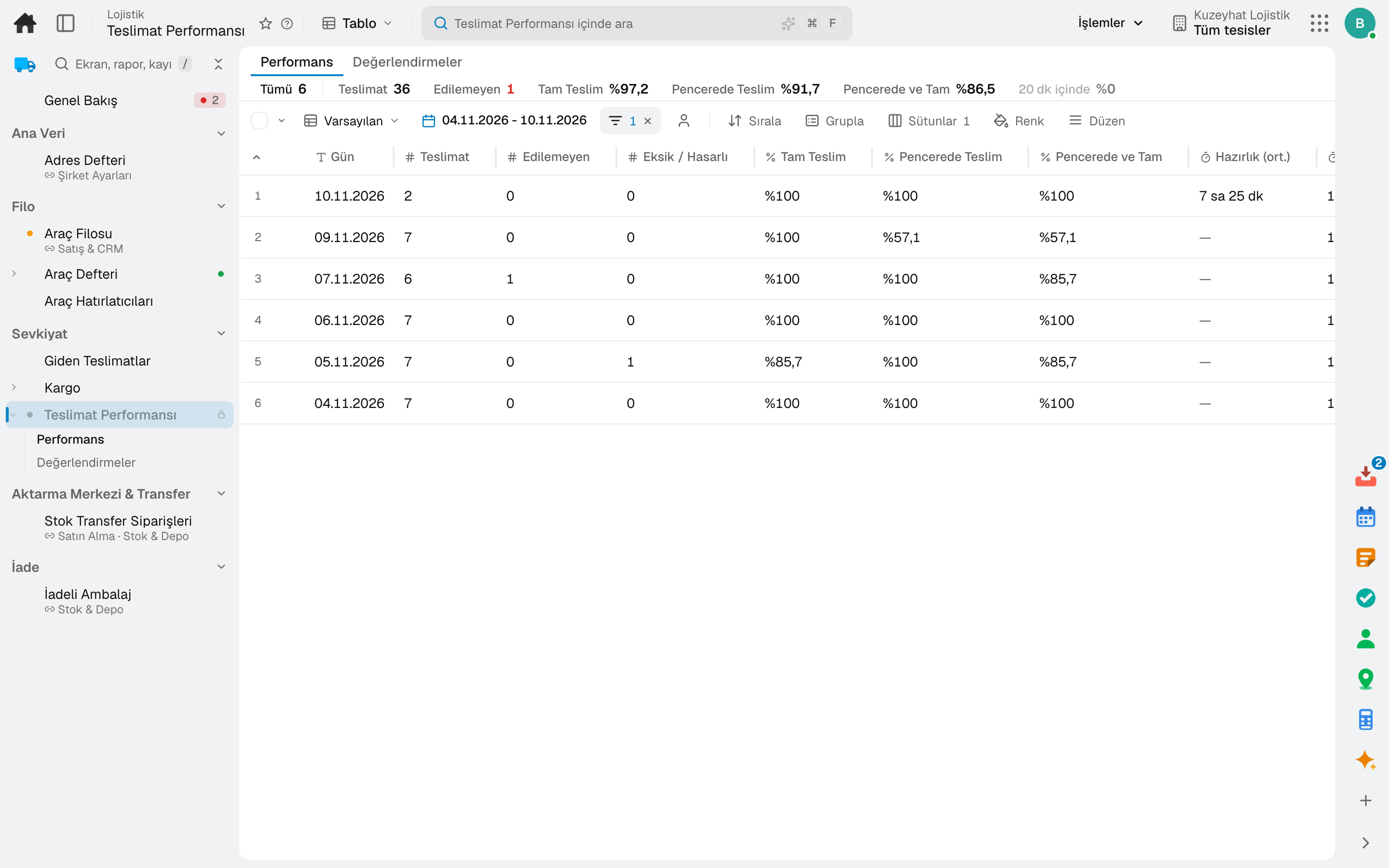
The driver sees the trip and the next stop on the phone. A delivery is closed with a signature and photo and the amount collected at the door is recorded; delivery performance is measured per day and per driver.
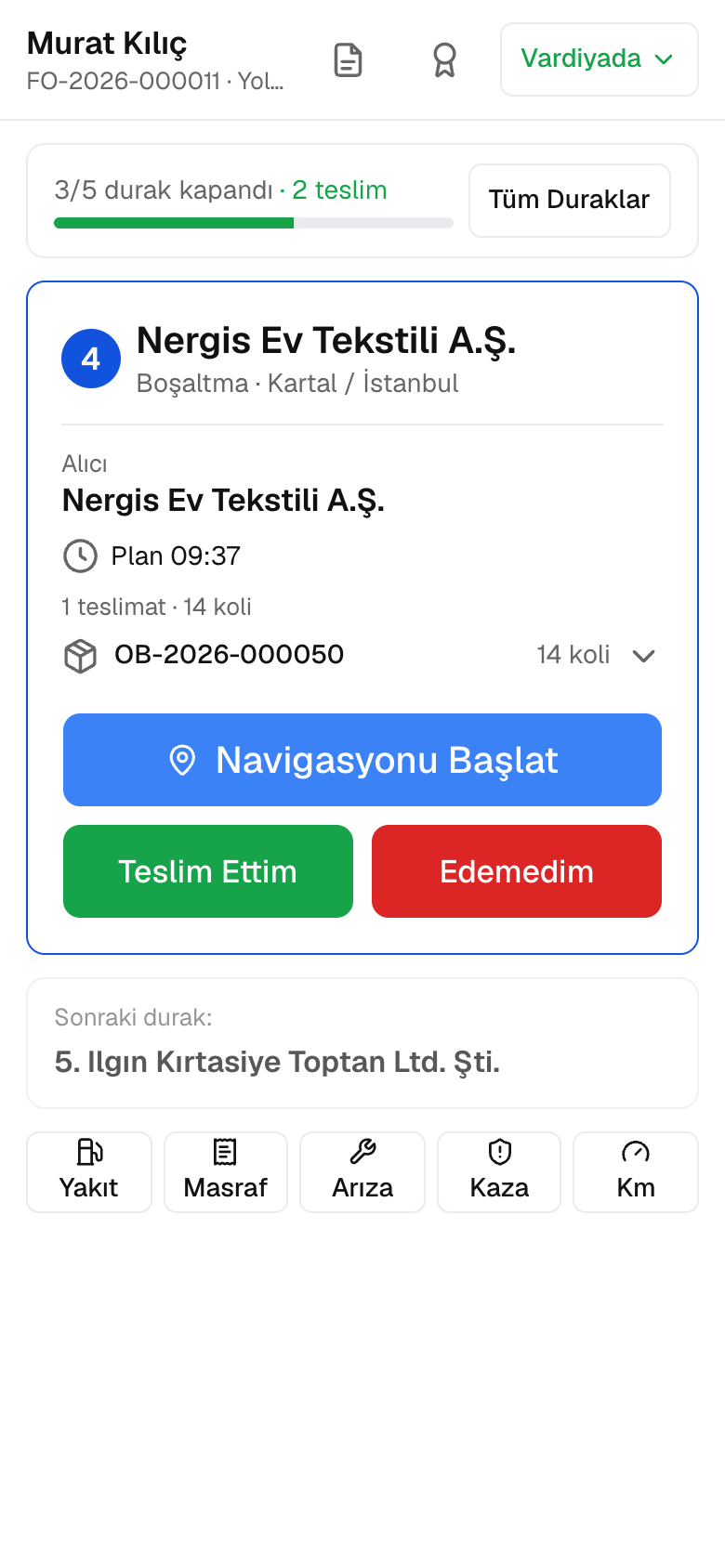
The driver sees the trip and the next stop on the phone; arrival and delivery are recorded.
Signature, photo, location and recipient are recorded; a partial, damaged or refused delivery is written down with its reason.
The amount the driver collects in cash, by card or by bank transfer is handed in to the cash desk at the end of the day; a collection is posted to the customer's account.
The driver fills in the vehicle inspection form on the phone; defects are passed on to maintenance, and a vehicle with a critical defect cannot go on a trip.
Delivered, failed and on-time rate are measured per day and per driver; the recipient rates the delivery.
03 / 08
Vehicle records, driver roster, document expiry dates, fuel and expenses in one place. Fuel, toll and service costs are charged to the trip and the vehicle.
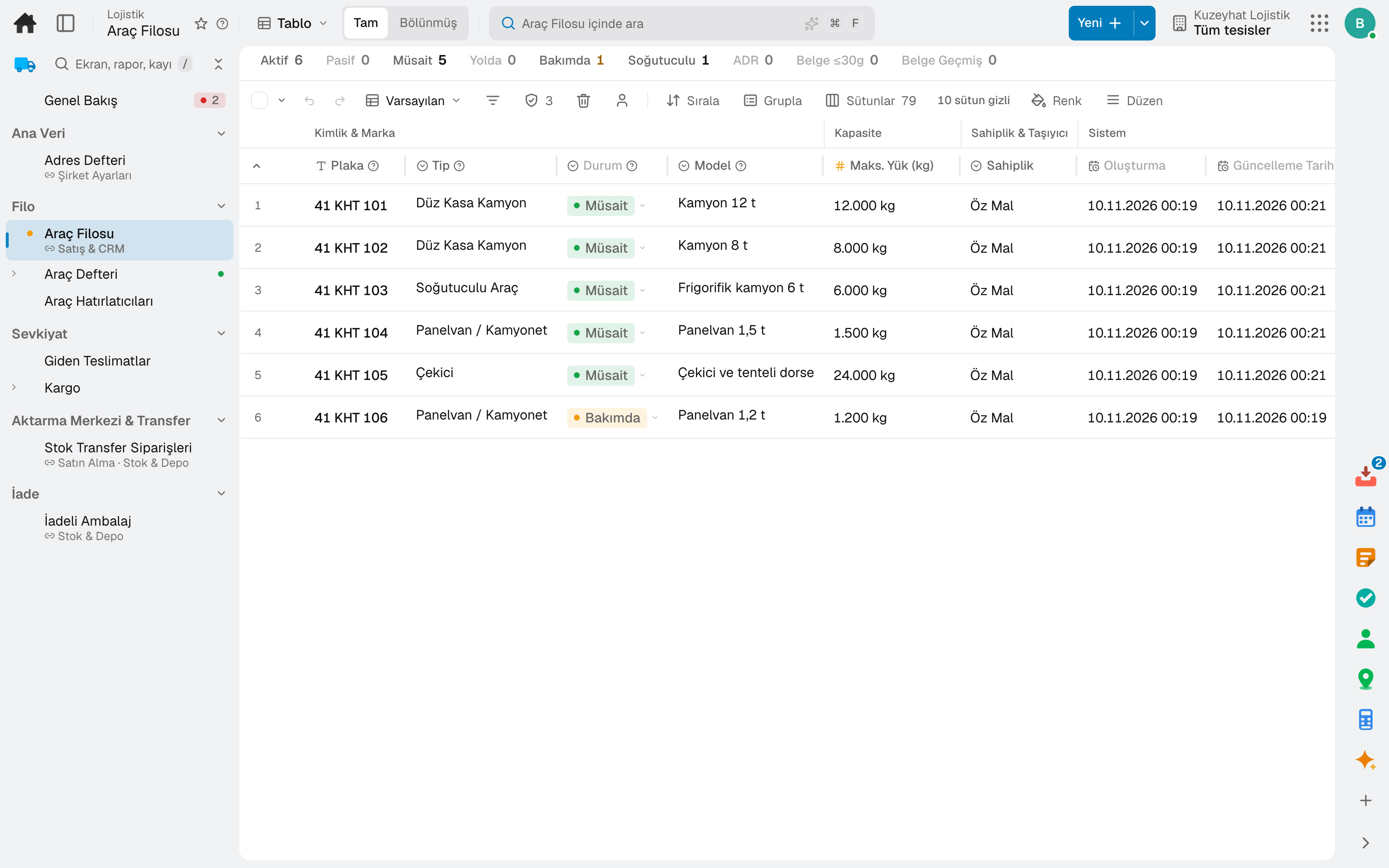
Plate, type, load capacity, ownership (owned, leased, subcontracted) and a refrigerated vehicle's temperature range on one record.
Inspection, compulsory traffic insurance, comprehensive cover, operating licence and tachograph calibration are tracked with their expiry dates; each expiry goes to the calendar and the task list.
Licence class and validity, SRC certificate and psychotechnical certificate; a driver on leave cannot be assigned to a trip.
Fuel, charging, mileage and tolls; fuel card statements are imported and costs are charged to the trip and the vehicle.
Tyres are tracked by position and an alert is raised when tread depth falls below the legal minimum; service orders are opened for the vehicle.
Fuel, maintenance and accident cost per vehicle is compared across the fleet with a per-km scorecard.
04 / 08
Exceptions on the road in one list: delays, temperature readings and cold chain breaches land in the TM Alert Centre; the vehicle's location and the driver's driving time are tracked.
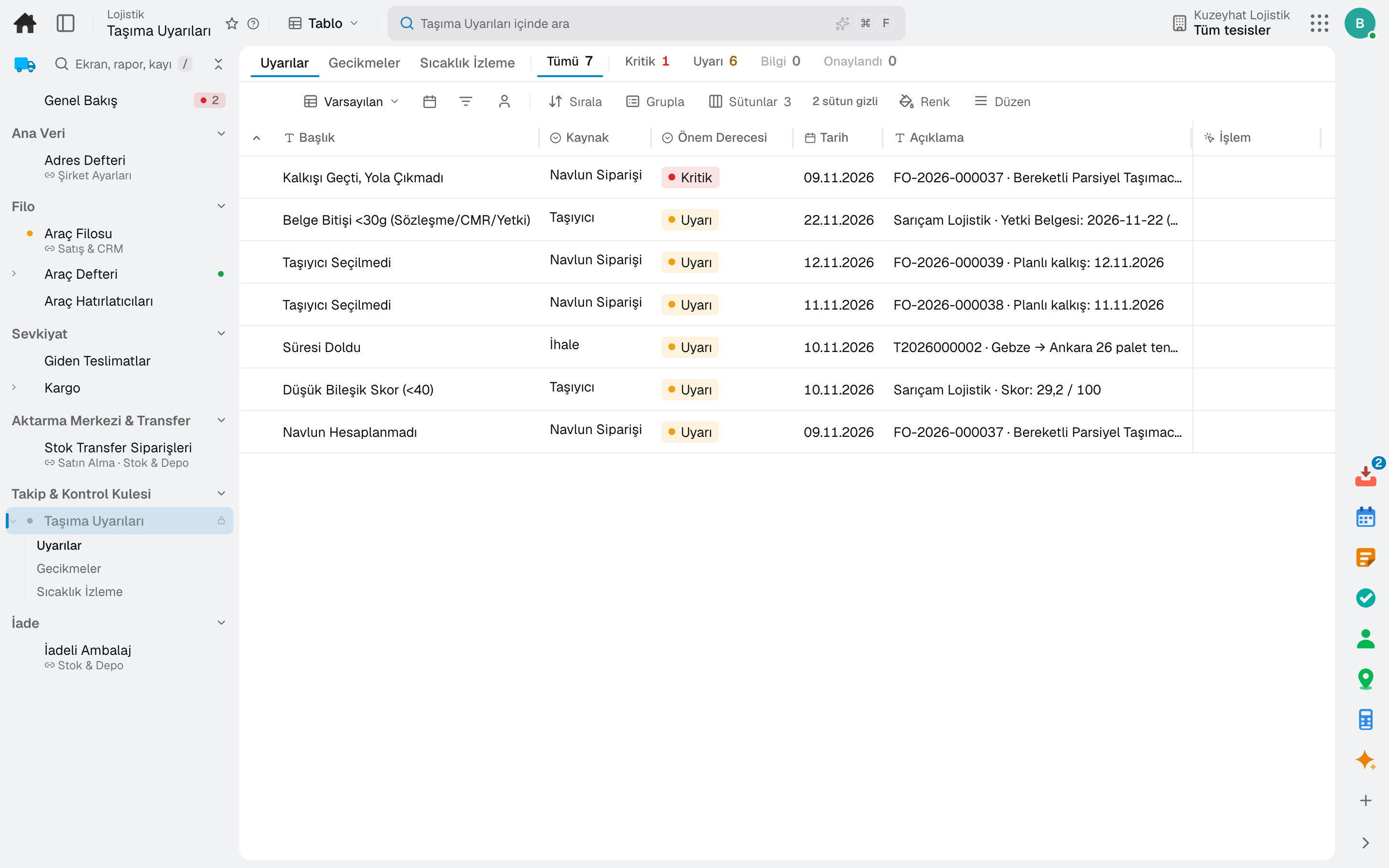
Freight order delays and settlement, tender and carrier exceptions in one list; the alert's owner, acknowledgement and closure are shared across the team.
The trip's temperature readings are recorded; a reading outside the range lands in the alerts as a breach.
The vehicles' latest location on the map; choose a driver, day or trip and the route history is drawn.
Daily and weekly driving time and the break rule are tracked; a driver who has run out of hours is stopped when being assigned to a trip.
Inspection defects, tyre thresholds, document expiries and temperature events are gathered in the vehicle's feed.
05 / 08
For those who hand loads to carriers: rate comparison, spot and annual lane tenders, capacity allocation, carrier scorecards and matching carrier invoices to settlements.
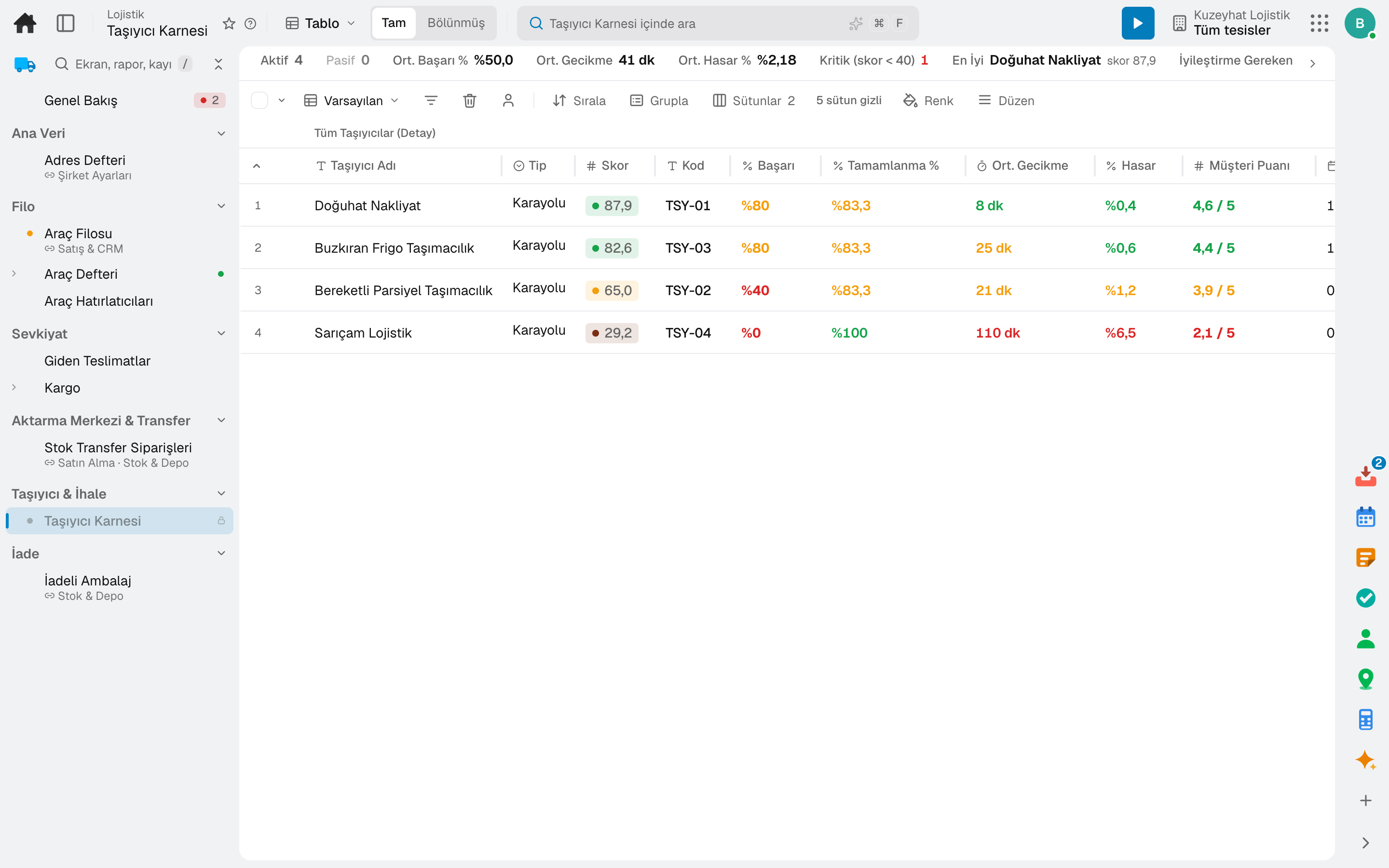
Operating licence and its expiry, framework contract and blacklist; a carrier whose contract has ended is excluded from assignments and tenders.
Agreements by flat rate, km, kg, m³, pallet or tiered table; carrier rates are compared for the same load.
Carriers are invited to a freight order; bids and counter-offers are collected and the load is awarded to the best bid.
Bids are collected per lane; a primary and a backup carrier are chosen and contracted.
Carriers are scored on on-time delivery rate and cost; the score appears in the carrier list.
The period's settlement is matched to the lines of the carrier invoice; a difference outside tolerance goes to dispute, and what is approved is posted to accounting.
06 / 08
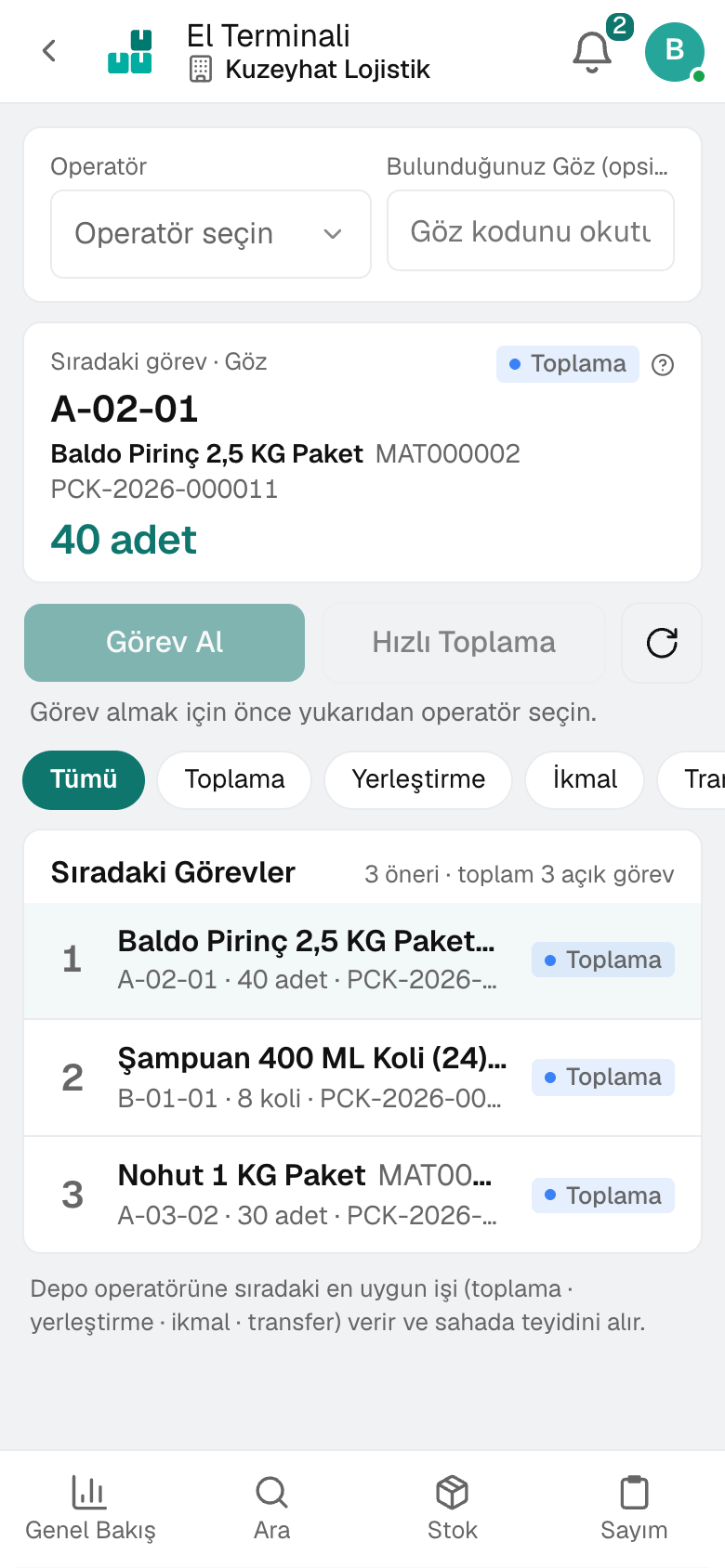
A warehouse with bin locations: incoming goods are put away to a bin by rule, deliveries are picked in waves, and the operator confirms the next job on the RF terminal.
Bins are generated in bulk from aisle, rack and level ranges; each bin's weight, volume and pallet capacity is defined.
Empty bin, fixed bin, add to existing stock or nearest to the dock; incoming goods are directed to a bin by rule.
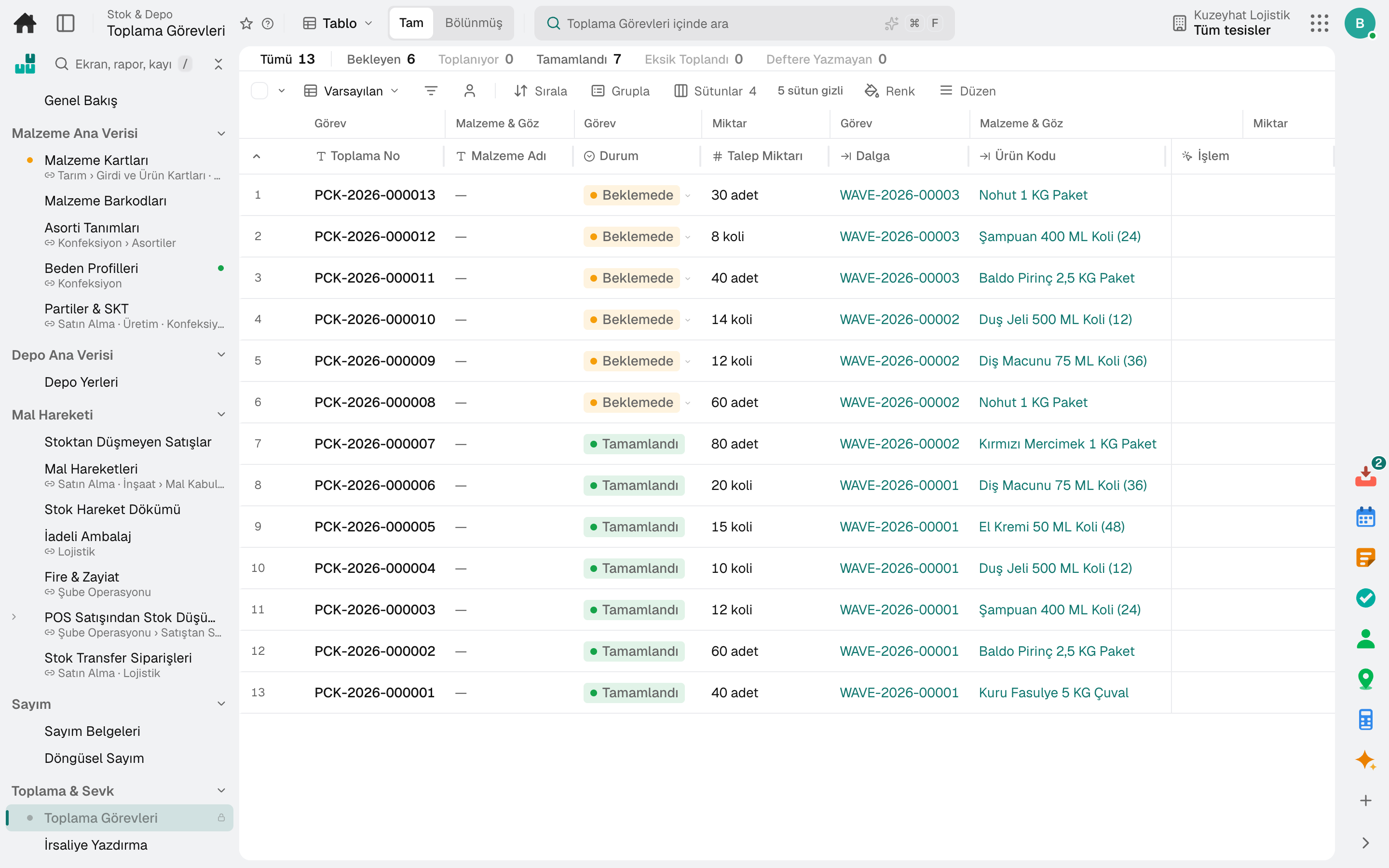
Deliveries are grouped into waves; a released wave creates the picking tasks, and bins are suggested by FEFO.
The operator is given the best next job by score; picking, putaway, replenishment and transfers are confirmed on the floor.
Picked goods are packed into cartons or onto pallets; each pallet gets a permanent SSCC identifier and label.
Dock appointments are given for loading and unloading; a time slot at full capacity takes no new appointments.
07 / 08
A contract with tariffs for each customer whose goods you store: occupancy is measured every night, goods receipts and goods issues are counted from movements, and a draft service invoice is created per contract at month end.
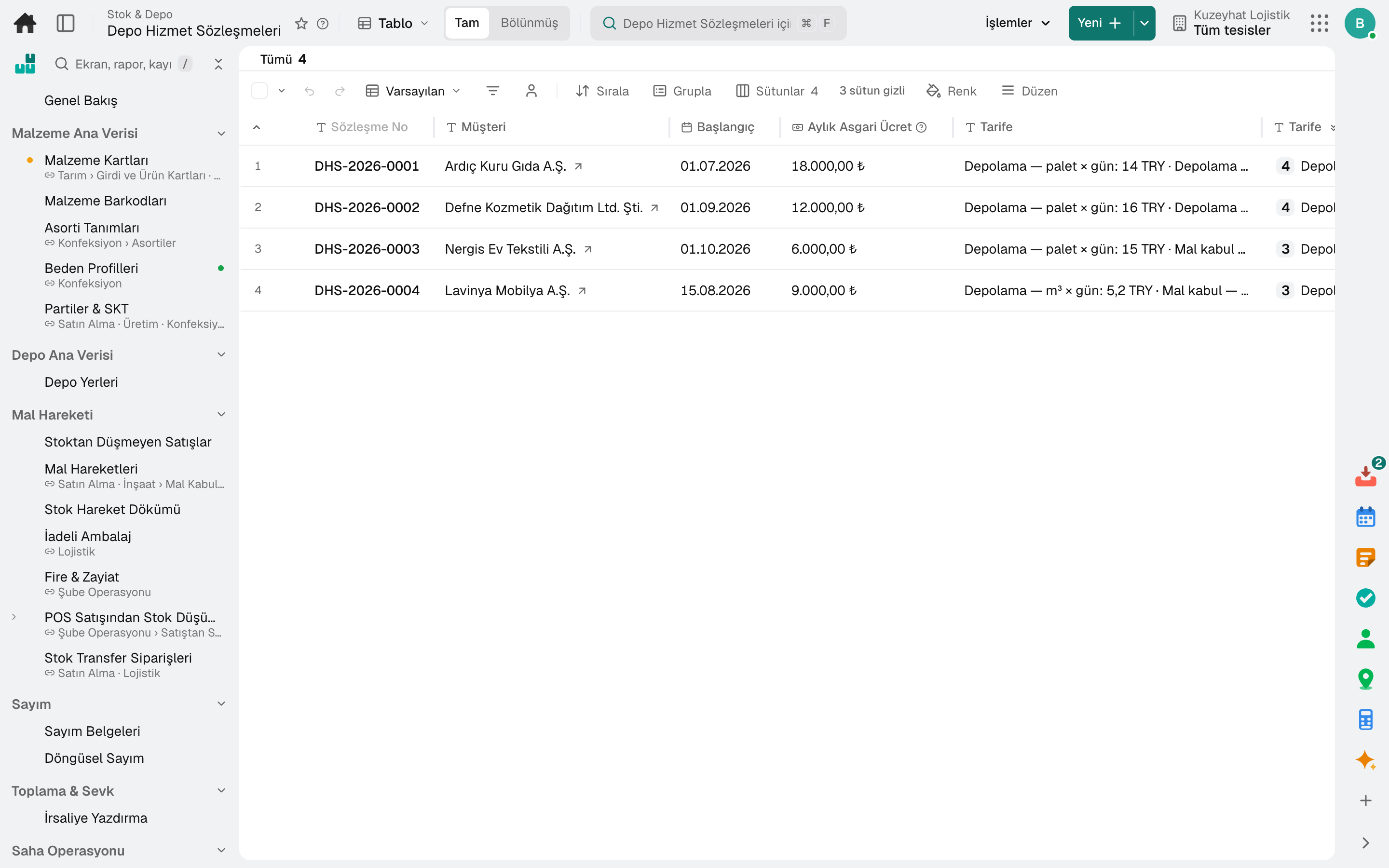
Start, end, currency, VAT and monthly minimum fee; one valid contract per customer for any given day.
Storage by pallet × day, m³ × day and unit × day; goods receipt and goods issue are charged on separate lines.
The pallets, volume and quantity taken up by customer goods are measured every night; when needed, "measure today" runs on demand.
Customer goods are tracked on separate records; they do not count towards your stock value.
At month end you get a preview and a draft sales invoice is created per contract; a day without a measurement is flagged and not invoiced automatically.
Extra charges such as labelling, palletising and overtime are added to the period invoice as lines.
08 / 08
Line haul between hubs, cross-docking, stock transfers between sites, returnable packaging and returns logistics on the same data.
Hubs and points are defined; line haul between hubs is tracked from the same screen.
Goods receipts that match a rule are routed straight to dispatch; docks and time windows are planned per site and day.
Transfers between sites are shipped and received; stock in transit, losses in transit and delivery discrepancies are tracked.
Pallet and crate balances are tracked per customer and supplier; return pickup, goods receipt, inspection and decision on one screen.
In the package
All on the same data model: a record entered in one module is never re-entered in another. The other 20 modules are open in your account too.
Your own fleet and your carriers in one control tower.
11 sub-modulesInventory and warehouse management software
Every product's location, batch and movement at your fingertips.
9 sub-modulesMaintenance management software
Breakdowns reported by QR, maintenance plans from the calendar.
5 sub-modulesAccounting software
In the journal the moment the invoice is issued; no waiting for month end.
13 sub-modulesTry it free for 15 days; no credit card needed. We reply to your questions within one business day.