Field record
Area (decares), location, soil, irrigation, owned, rented or sharecropped; fields, pastures, paddocks and barns in the same list.
For field, greenhouse and orchard producers and dairy farms: fields and the season's crop plan, field jobs and spraying, observations and advisor recommendations, harvest and shipment, herd and milk, subsidy claims. Inputs are deducted from stock to the field's cost centre; the season's cost and profit are visible field by field.
01 / 06
Every field is recorded with its area, soil, irrigation and whether it is owned or rented. The season's crop, target yield and expected price are planned per field; the realized profit shows on the same card.
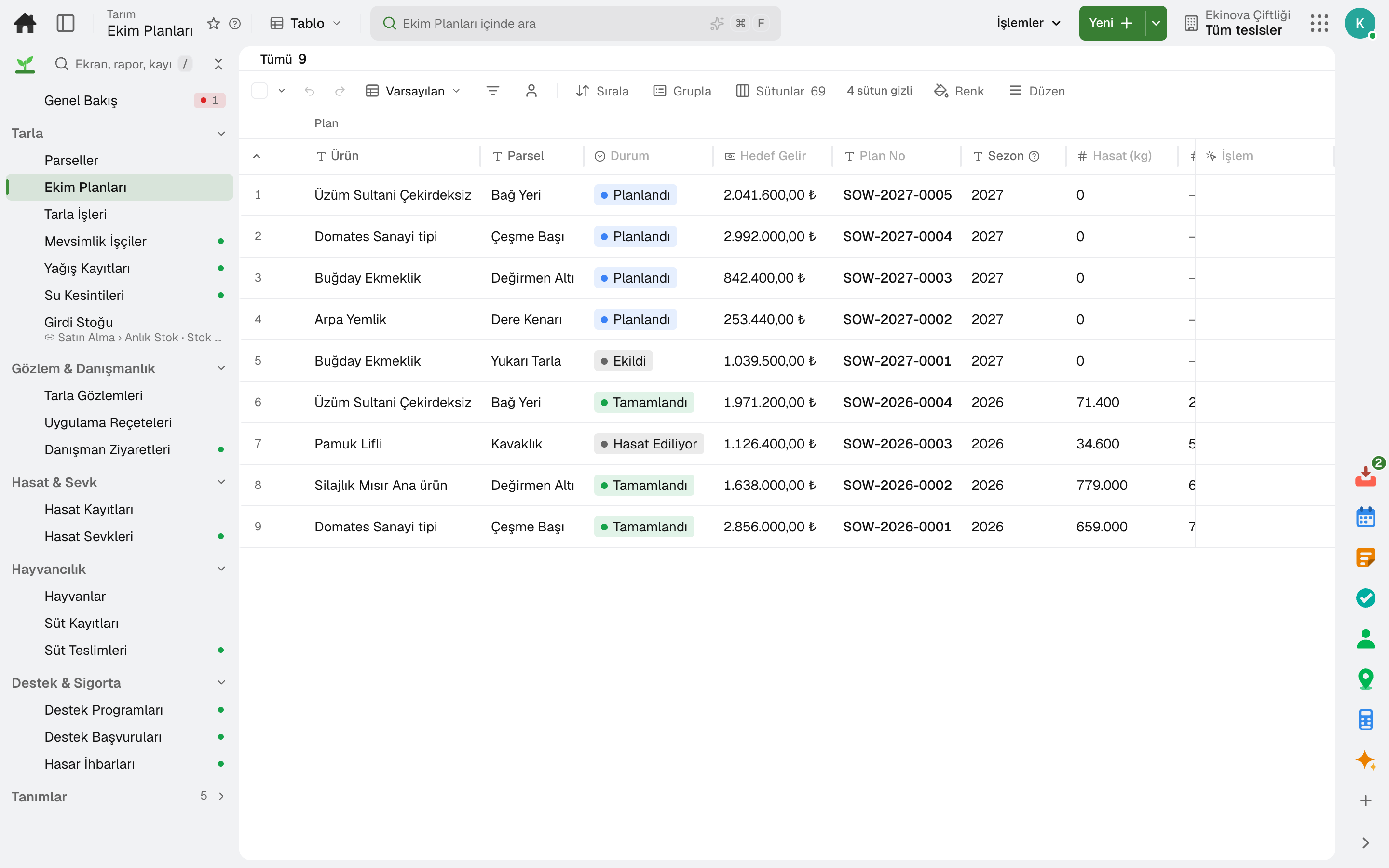
Area (decares), location, soil, irrigation, owned, rented or sharecropped; fields, pastures, paddocks and barns in the same list.
Crop and variety, sown area, planned sowing and expected harvest dates, target yield and expected price; target output and revenue are calculated from these.
A plan moves to the field with “Sown” and closes after harvest with “Close Season”; an unsown plan is cancelled.
Planned cost, the estimate of actual and remaining work, variance to budget and break-even yield are compared line by line.
Harvest, inputs, labour and machinery cost, rent share and profit on the season card; shared overhead is allocated to seasons by sown area.
A rented field's rent and end date, and in sharecropping the landowner's crop share, are kept on the field record.
02 / 06
Tillage, sowing, fertilizing, spraying, irrigation and pruning are planned. Inputs are entered as a rate per decare; when the job is done they leave stock to the field's cost center.
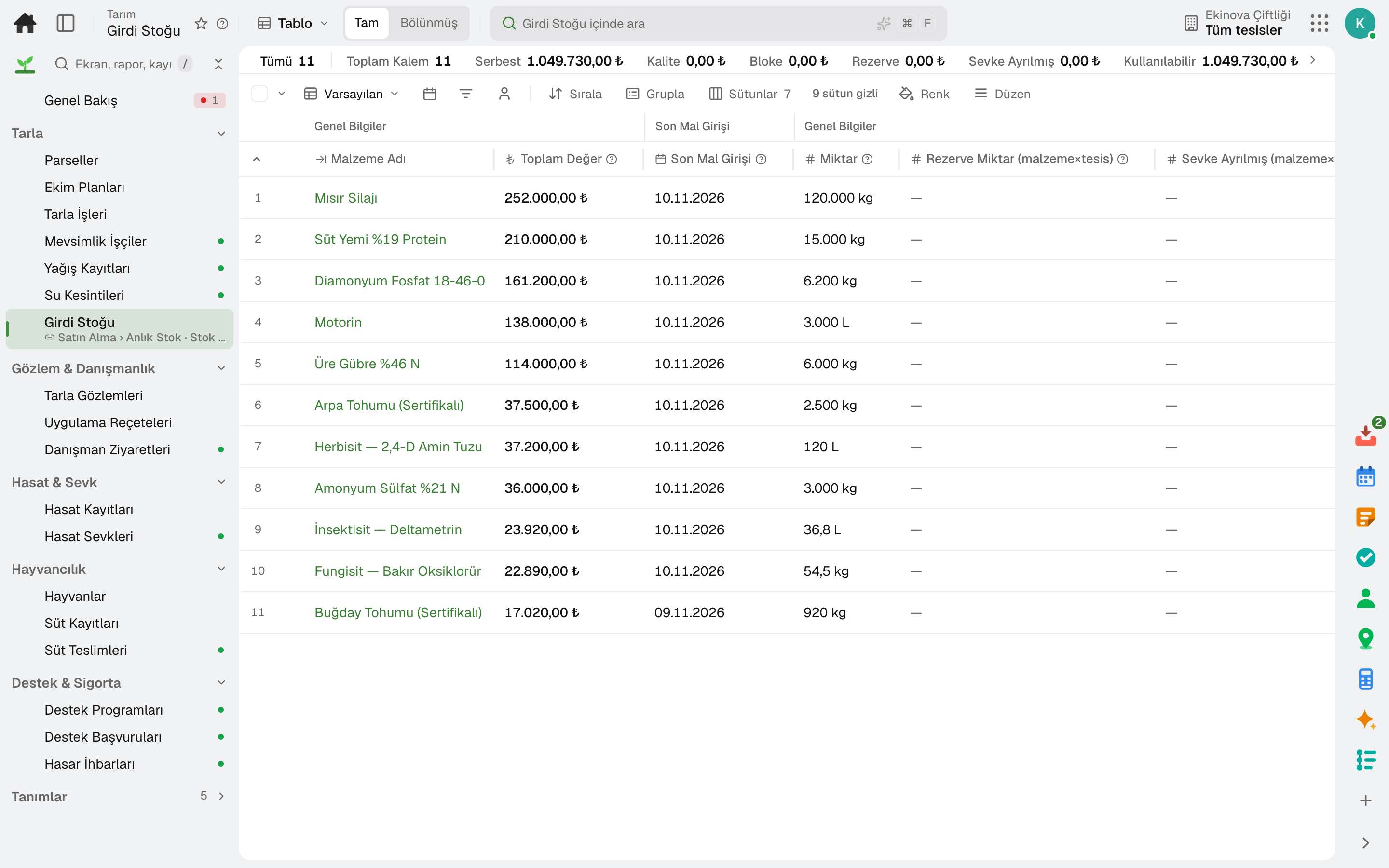
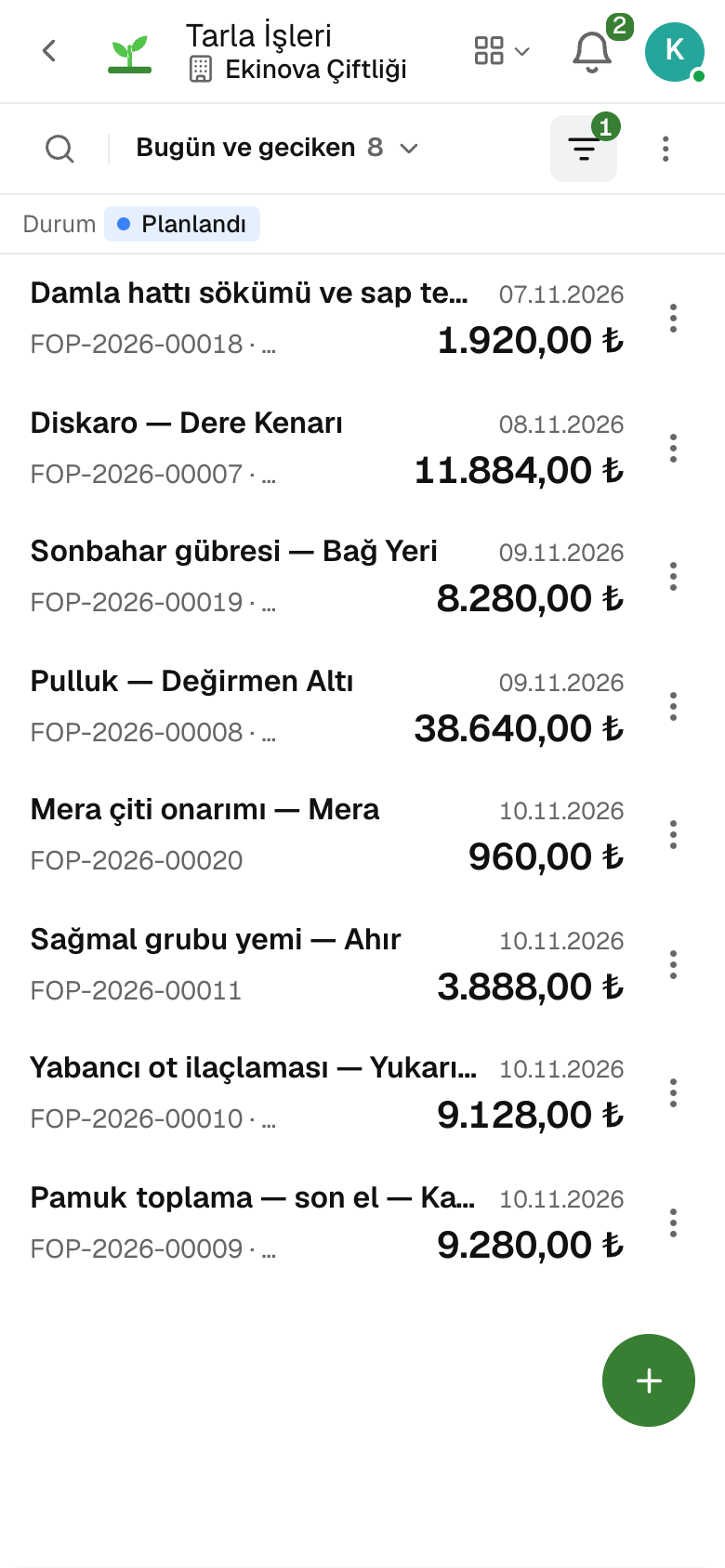
Seed, fertilizer and crop protection are entered as rates; the planned quantity is calculated from the worked area.
Workers pick the job from the “Today and overdue” list; date, area, quantity used, photo and the phone's location are recorded.
The team gets each person's job list for the day; the next seven days' work and labour needs in a single window.
Inputs for planned jobs are compared with stock on hand; a purchase request is raised for missing inputs.
Each spraying's rate, water volume, weather reading and e-prescription number are on record; the register comes out of a single window.
Selected fields become planned irrigation jobs round by round; days that fall in an outage are flagged.
03 / 06
Pests, diseases and weeds seen in the field are recorded with photo and location. Crossing the economic injury threshold is flagged; the advisor's recommendation becomes planned jobs field by field.
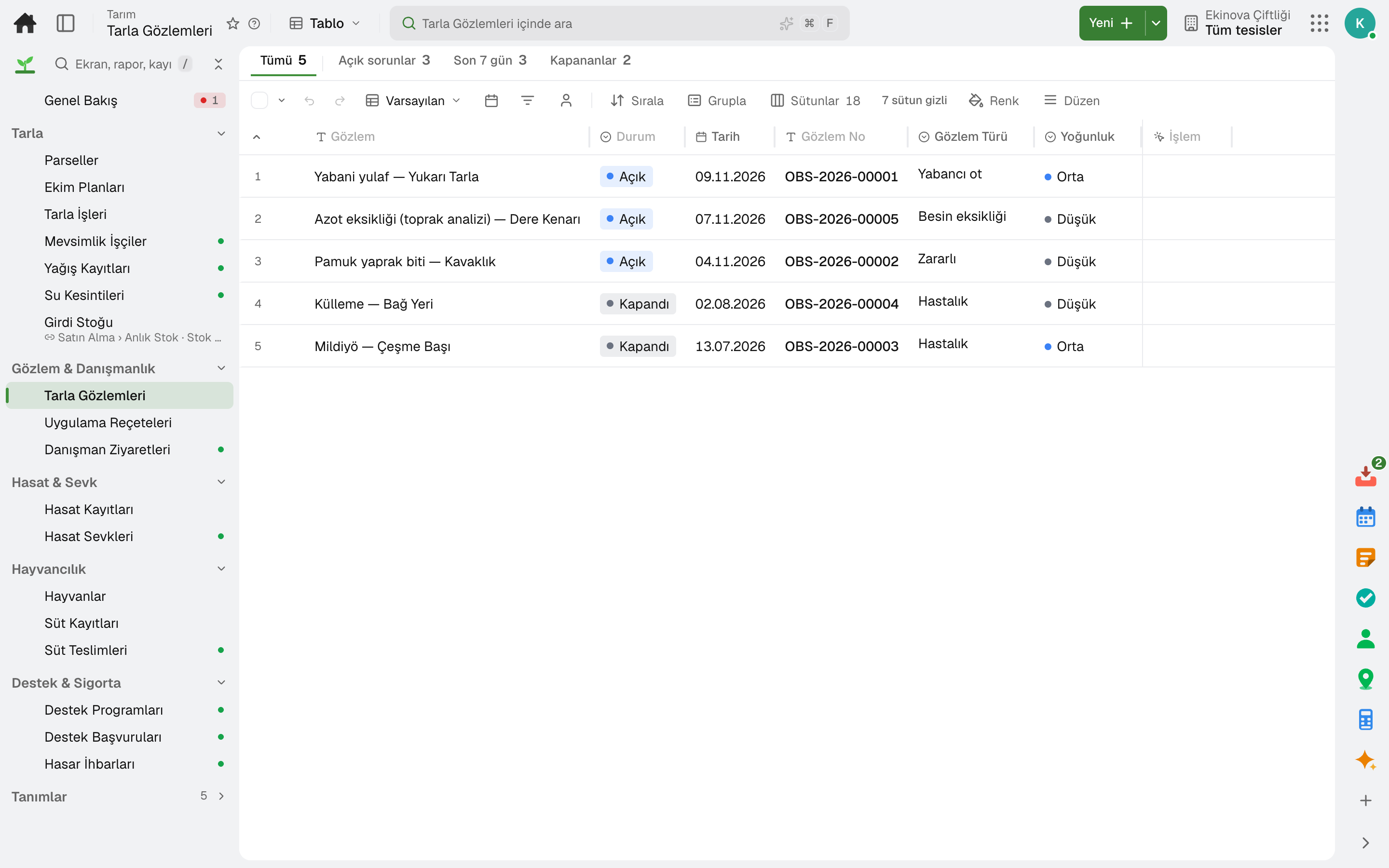
Agent, severity, affected area and count; photo and the phone's location. Open issues await action and are closed once resolved.
Thresholds are defined per agent, crop and growth stage; when an observation reaches the threshold it is flagged “Threshold exceeded” and the manager is notified.
Target, application window, fields and inputs with rates; “Convert to Job” opens a planned field job for each field.
Fields visited, report and recommendations on record; observations and recommendations written that day show linked to the visit.
The advisor role sees jobs and observations, not workers' personal records.
04 / 06
Harvest is recorded with quantity, yield, moisture and grade; nothing can be harvested before the spray's waiting period is over. Shipments leave stock, and when the buyer is on file the invoice opens as a draft.
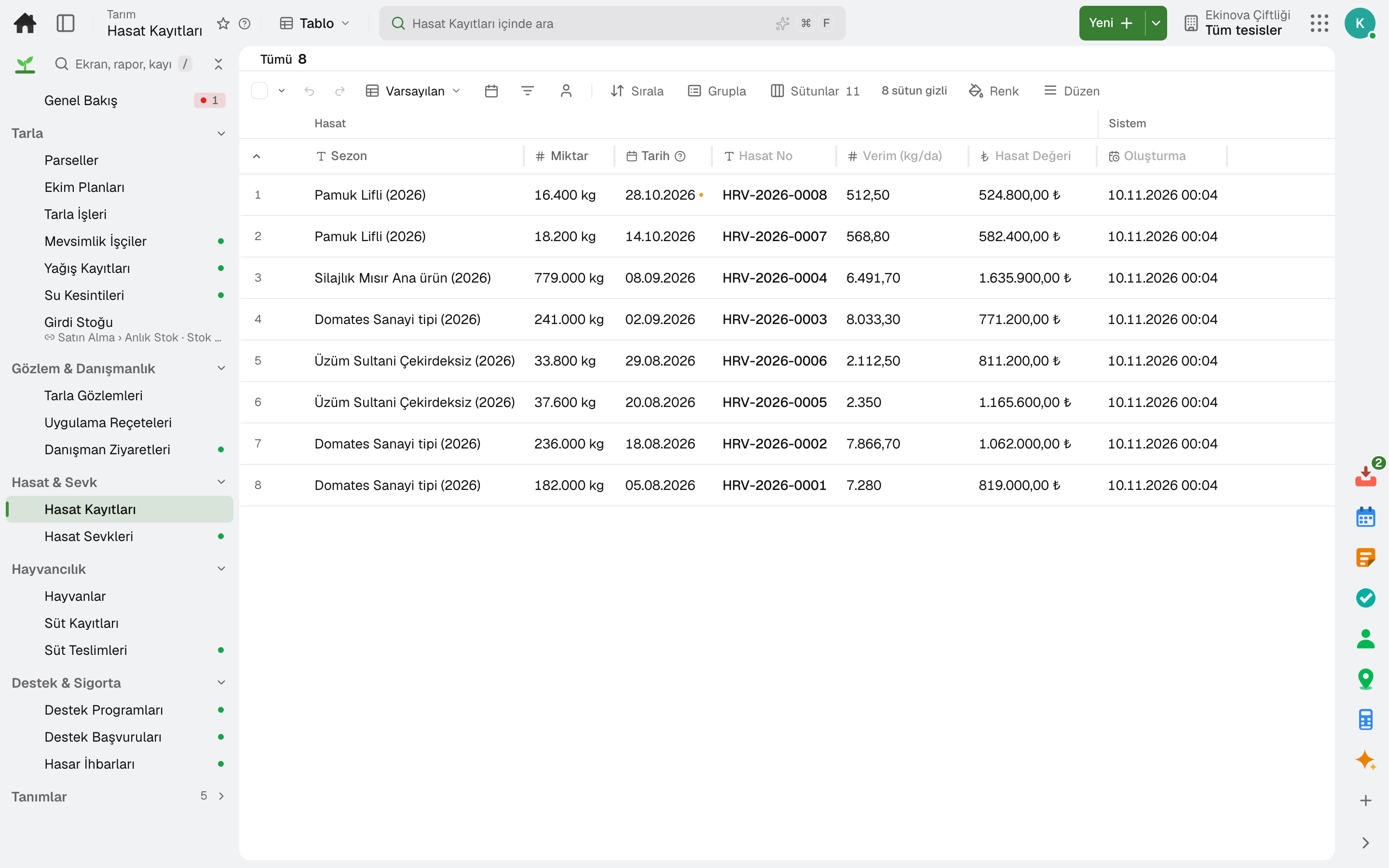
Date, quantity (kg), harvested area and yield, moisture, grade and price per kilogram; harvest value is calculated from quantity and price.
The pre-harvest interval for each crop is read from the product label; nothing can be harvested before it is over.
The harvest grade is picked from a list; a harvest without a price takes the grade's price.
“Receive to Stock” puts the produce into stock at the season's cost per kilogram.
Shipments to the wholesale market, traders or buyers leave stock; when the buyer is on file a draft sales invoice opens.
For wholesale market shipments the market tag number, quantity and price are entered; a tag that deviates from the record is flagged, and a shipment without a tag is warned.
05 / 06
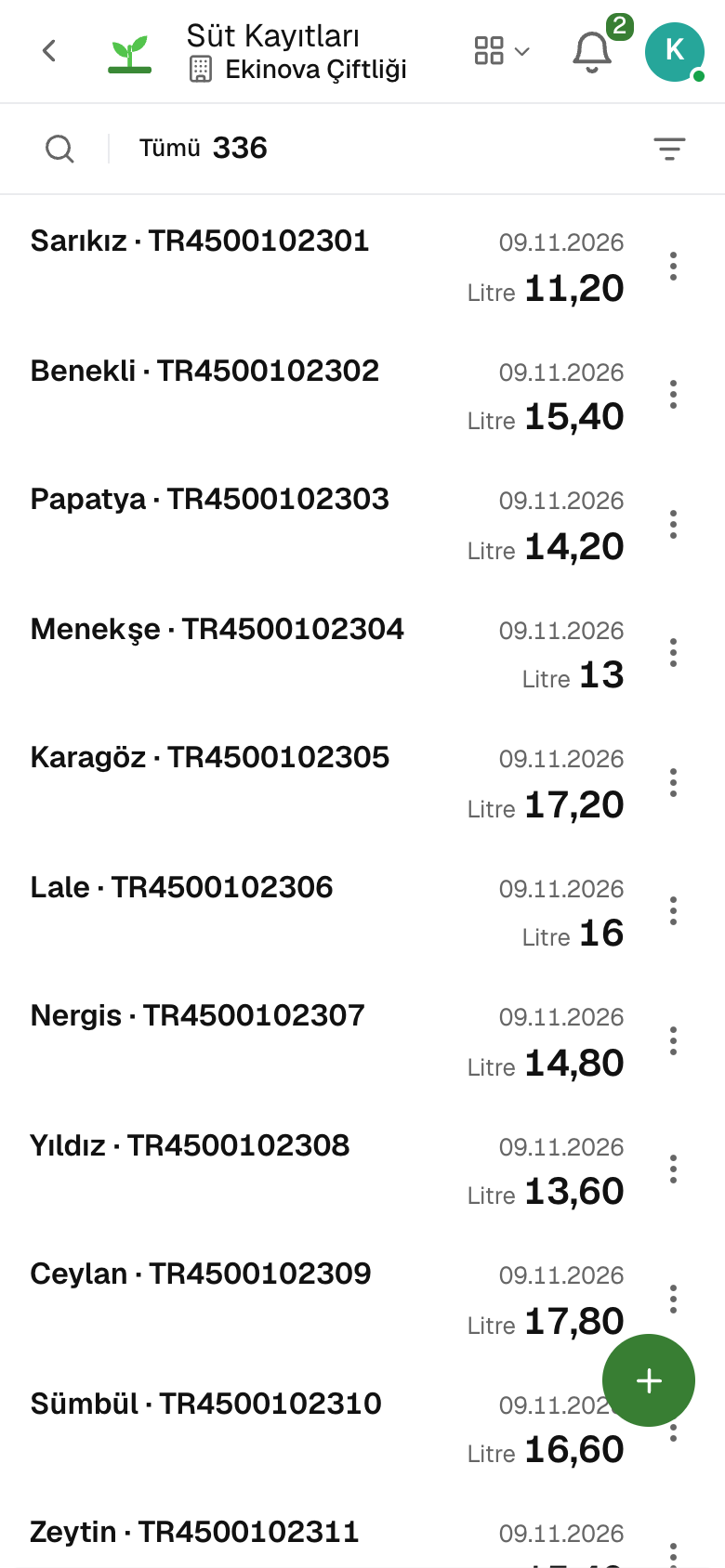
The animal record holds tag, pedigree, breeding and health; milk from an animal in its withdrawal period stays out of the tank. Milk deliveries are recorded with the buyer's analysis and compared with the buyer's statement at month end.
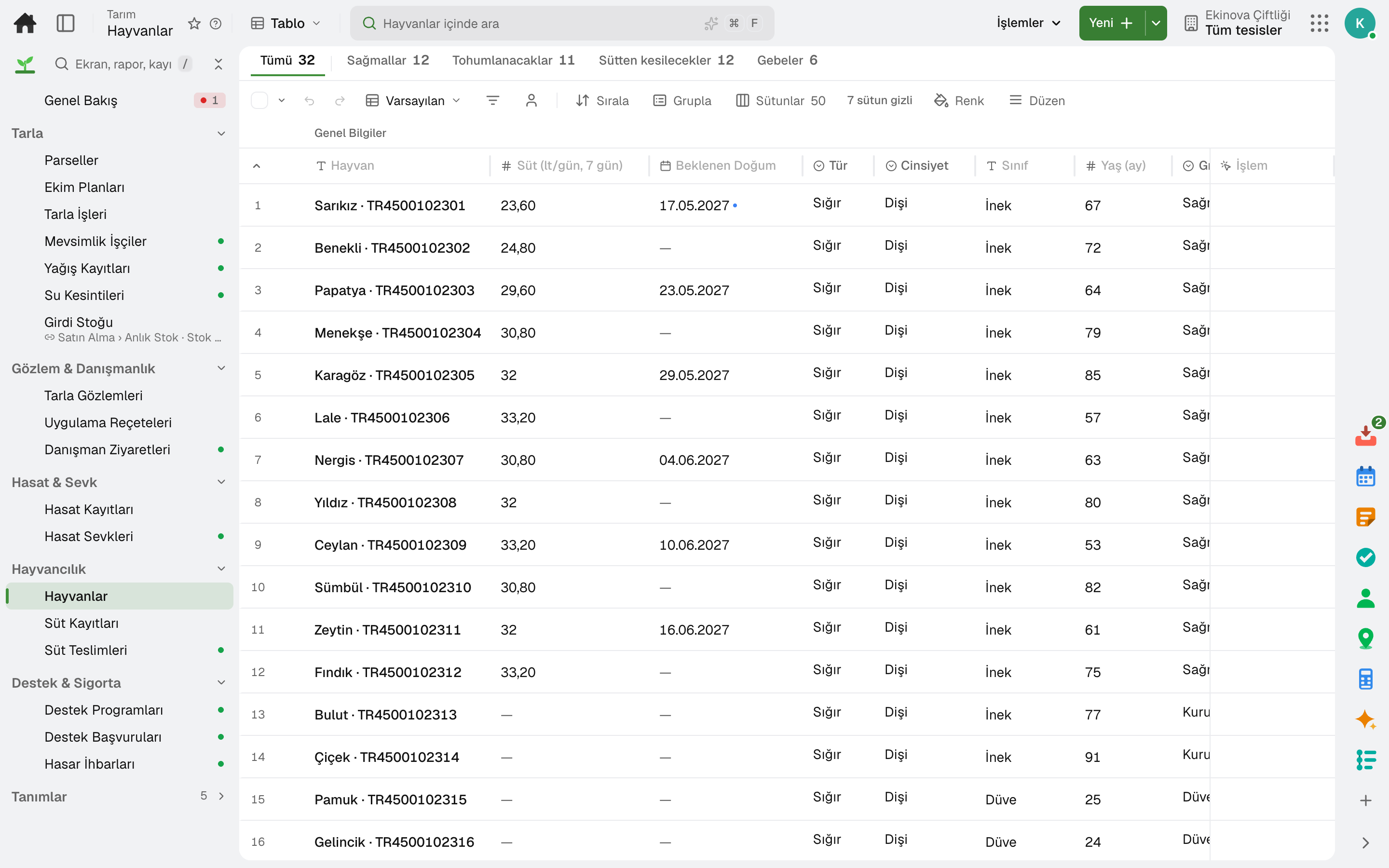
Ear tag and electronic tag, species, breed, dam and sire, group and location; pregnancy, expected calving and daily milk are read from the record's events.
Calving (the calf's record opens automatically), insemination, pregnancy checks, vaccination and treatment in a single window; the drug's withdrawal period is remembered.
“Enter Milking” records all milking cows of a milking in one window; milk from an animal in withdrawal is recorded as discarded.
Cows whose last three days fall below the previous ten are listed.
Daily deliveries are recorded with the buyer's fat, protein, somatic cell, bacteria and antibiotic analysis; the monthly reconciliation compares them with the buyer's statement.
The buyer's schedule is defined with base price, bonuses and deductions; “Milk Invoice” opens a draft sales invoice with the same calculation.
06 / 06
Rainfall and water outages are tracked field by field; seasonal workers' hiring records and training are kept; subsidy applications are followed through documents, public display and objection steps.
The gauge's daily reading; a field's last thirty days and the season's rainfall since sowing are summed from these records.
Fields in an ongoing outage are ranked by days without irrigation, crop and growth stage.
Start and end dates, labour intermediary, housing and transport, safety and crop protection training; workers under the minimum age cannot be recorded.
Hours, piece rate and day wage on the job's worker lines; the month's field timesheet is broken down per worker.
Program, field and season, calculated, approved and paid amounts; missing documents, public display and objections become tasks.
For damage such as frost, hail or flood the field's policy is found; the indemnity received goes into the season's profit.
Sub-modules
This list is generated from the product itself; it grows as new functions are added to a sub-module. Master data and settings are the shared ground of every module and are not counted as sub-modules.
In the package
All on the same data model: a record entered in one module is never re-entered in another. The other 19 modules are open in your account too.
Inventory and warehouse management software
Every product's location, batch and movement at your fingertips.
9 sub-modulesSales and customer management software
One customer record from opportunity to invoice.
16 sub-modulesAccounting software
In the journal the moment the invoice is issued; no waiting for month end.
13 sub-modulesPurchasing software
From requisition to invoice, every purchase approved and traceable.
10 sub-modulesHuman resources software
From hiring to exit, the employee's whole story on one card.
10 sub-modulesTry it free for 15 days; no credit card needed. We reply to your questions within one business day.