Items and customs value
Each item carries the HS code, origin, quantity, gross and net weight and unit price; freight, insurance and the delivery term go into the customs value.
For companies that import and export: customs declarations, HS codes and duties, licences and permits, sanctions screening, transit tracking, letters of credit and letters of guarantee. The declaration is tied to the order and the delivery; customs duty flows into the goods' stock cost.
01 / 07
Import and export declarations are prepared with their items, registered with the number issued by customs, and closed when the goods leave or are released for free circulation.
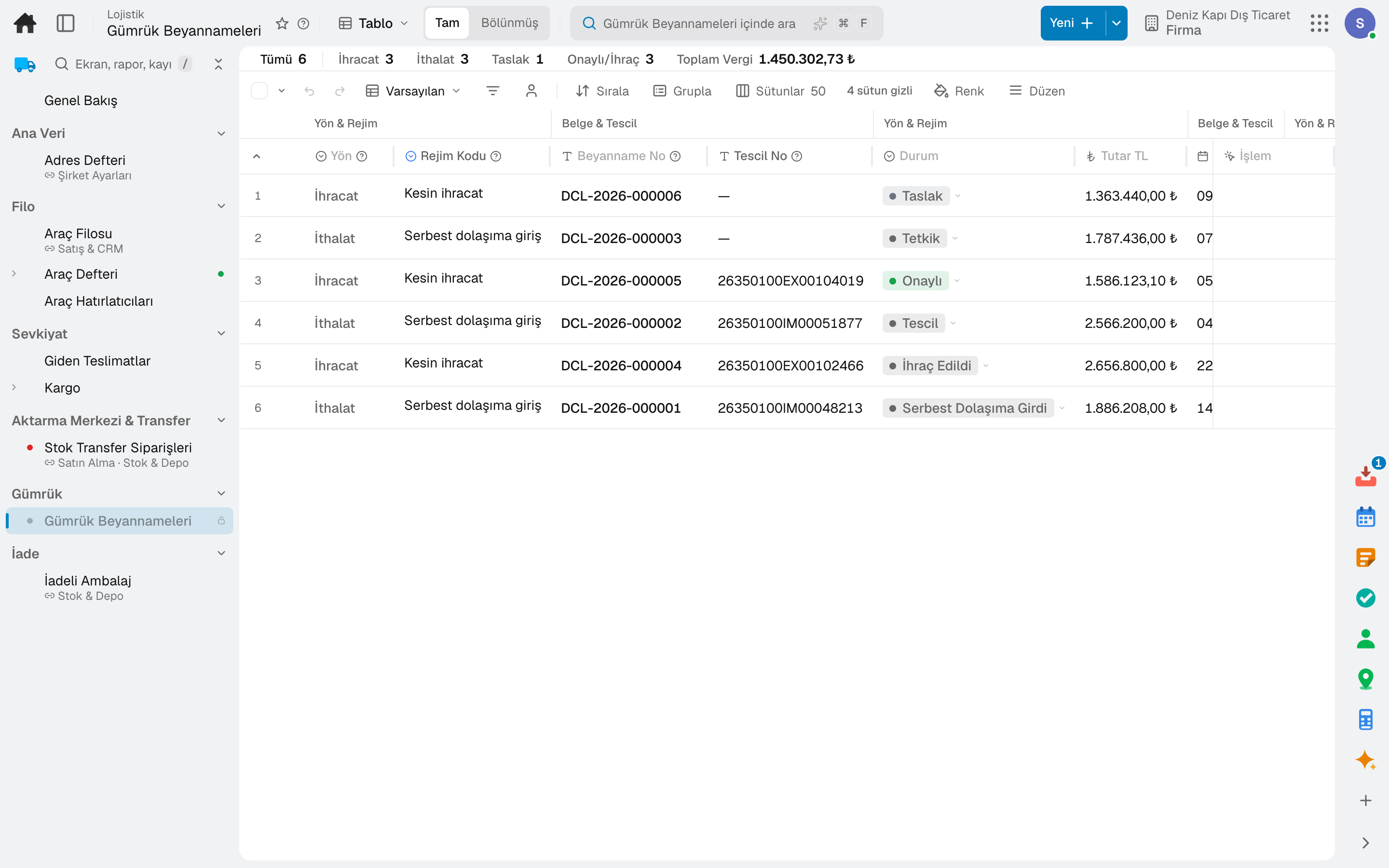
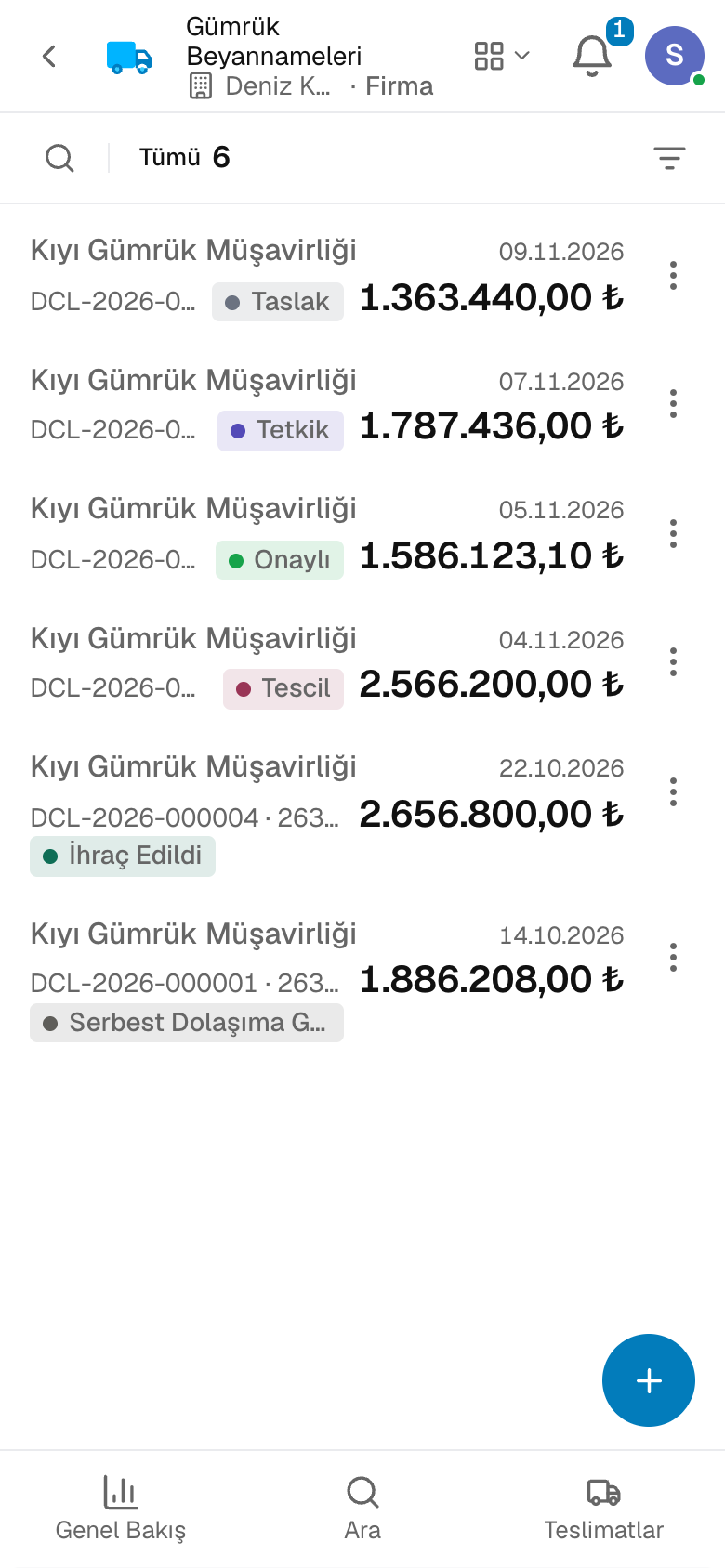
Each item carries the HS code, origin, quantity, gross and net weight and unit price; freight, insurance and the delivery term go into the customs value.
The export declaration opens from the delivery card; items come with the shipped quantity, and the HS code and origin from the product card.
Prepared, under review, registered, approved; then exported or released for free circulation, and closed. A declaration does not count as registered until its registration number is entered.
The declaration's risk is shown as a green, yellow or red channel with its reasons; if the buyer is on a sanctions list the channel is red.
Fields for the customs warehouse, inward processing and transit procedures sit in their own section of the declaration.
The consignment note (CMR) and the certificate of origin are prepared linked to the declaration.
02 / 07
The HS code is picked from the official tariff schedule and your company's duty rate is entered. Declaration duties are calculated at these rates; a product's HS code is entered once.
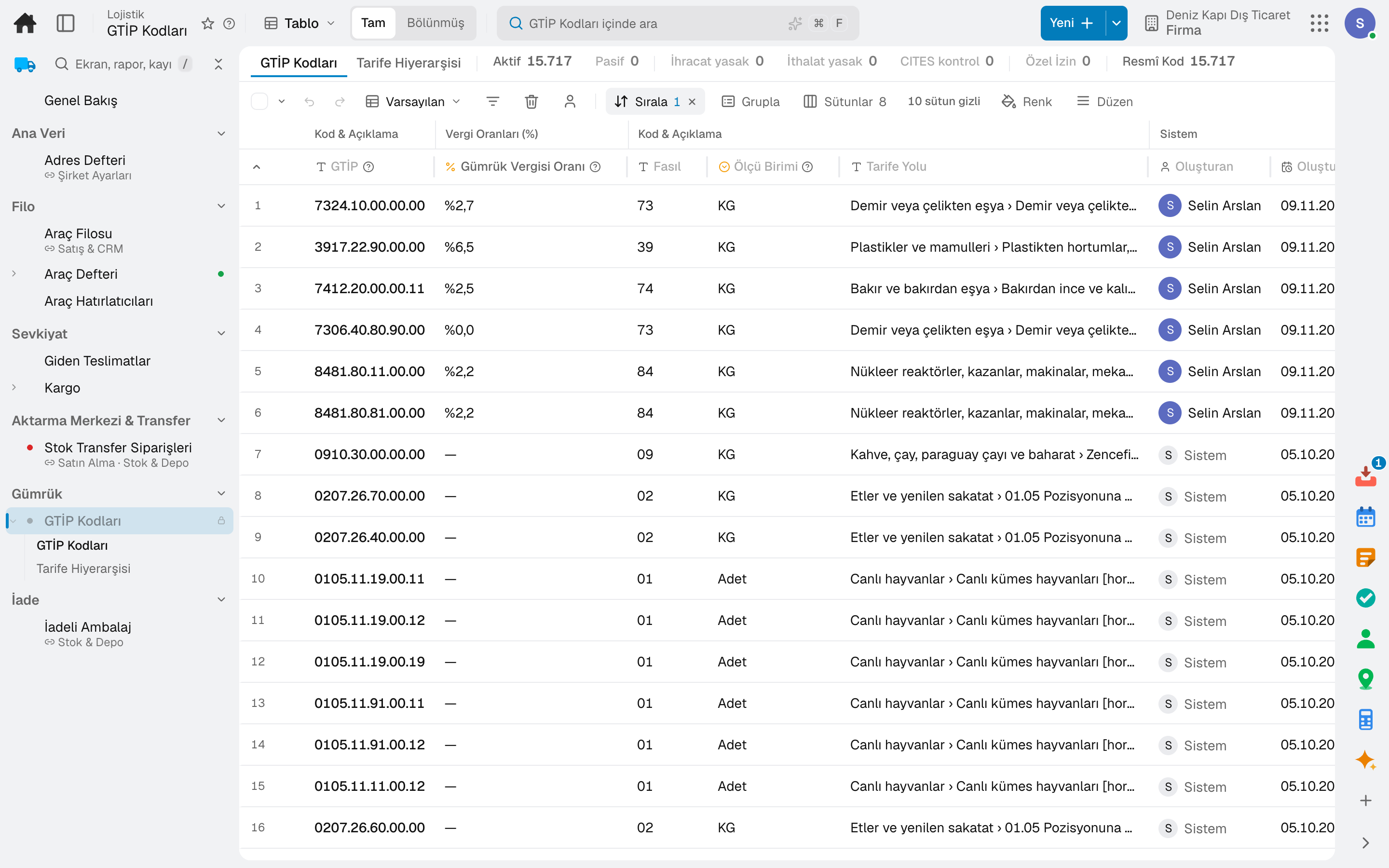
Section, chapter, heading and the twelve-digit code; the description of an official code comes from the tariff.
Customs duty, VAT, special consumption tax, stamp duty and additional financial obligation rates are written on your company's line.
An import or export ban and any special permit requirement show on the HS code line.
When a declaration is linked to a trade agreement, the preferential duty reduction is applied; the preview and the saved record give the same result.
The HS code, country of origin and weight are entered once on the product card; declaration items take them from the card.
03 / 07
Import and export licences, inward processing authorisations and movement certificates are kept with their issuing authority; an approved document's quota is drawn down by declarations.
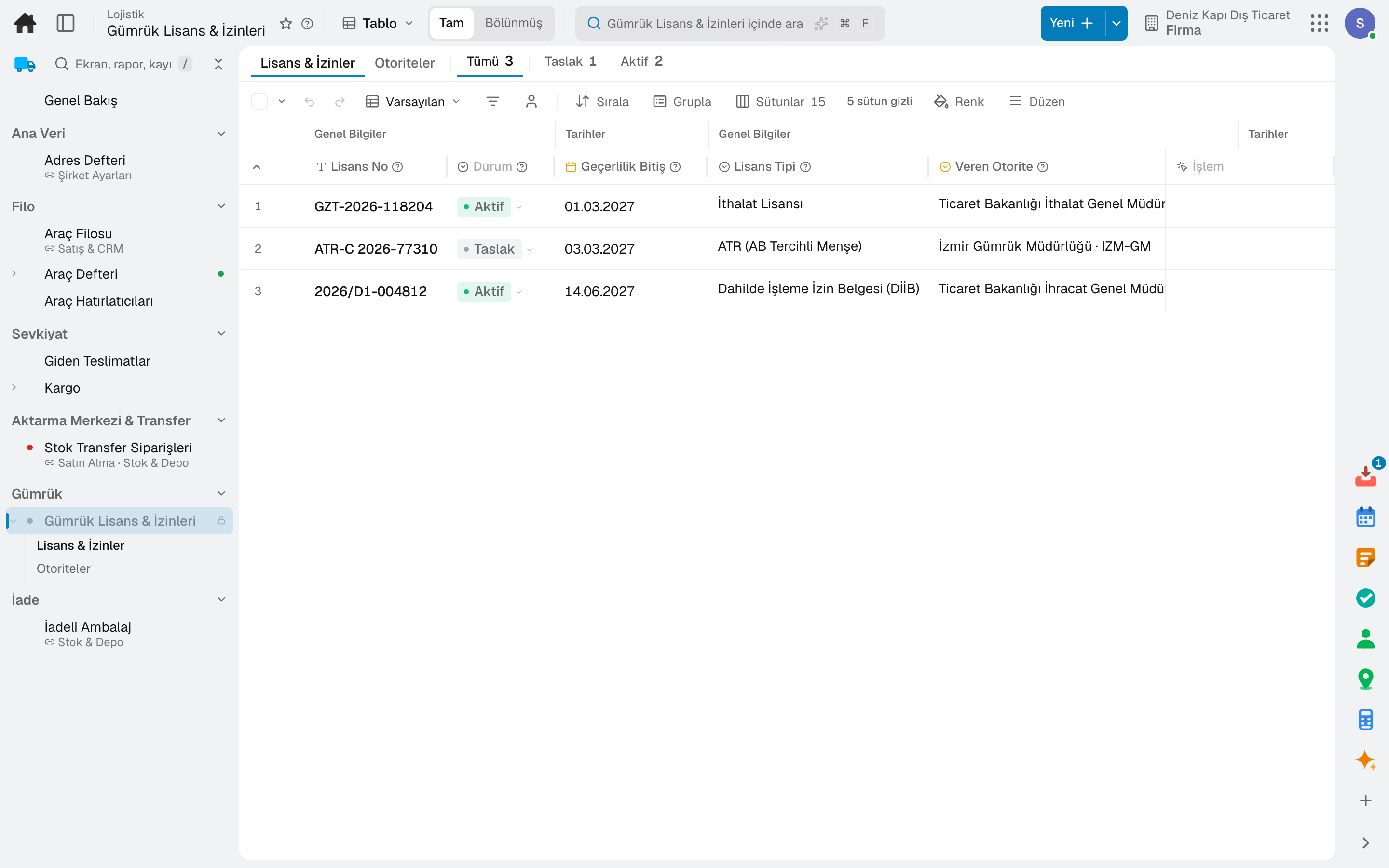
Import and export licences, inward processing authorisations, A.TR, EUR.1, health and phytosanitary certificates, dual-use goods permits.
The document's quantity and value quota, the amount used and the balance are recorded.
A licence linked to an item is drawn down when the declaration is registered, and restored if the declaration is cancelled or rejected.
A document moves from draft to approval; it can be suspended and reactivated, with the reason recorded.
Documents nearing expiry are listed separately; how many days ahead the warning starts is set on the document.
04 / 07
EORI numbers, customs brokers and trade agreements are set up in one place. Business partners are screened against sanctions lists and country embargoes.
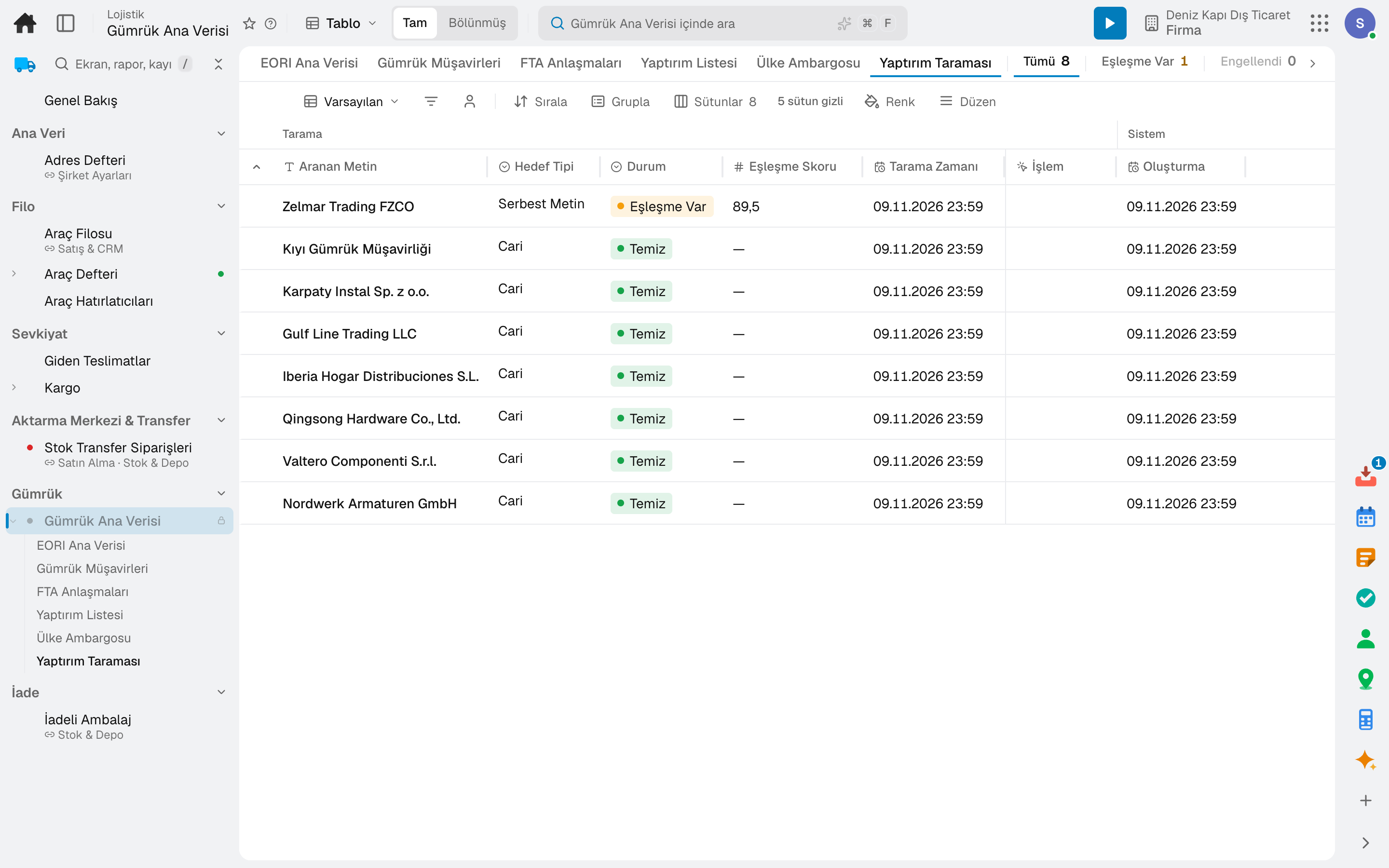
UN, EU, OFAC, Turkish and your own list; person, entity and vessel entries with sanction type and reason.
A company, person or vessel name is screened against a threshold score; spelling variations are caught too, and the result is kept in the history.
On a match, the decision to release the block or reject is given with a reason; the reviewer and time are recorded.
Country and region embargoes are kept with their scope and effective date; they can be suspended or lifted.
The customs offices a broker serves are recorded; a declaration cannot be opened at an office the broker does not serve.
05 / 07
The shipment's customs status is tracked: the transit record is linked to the declaration and moves on as customs responds. The list also opens on a phone.
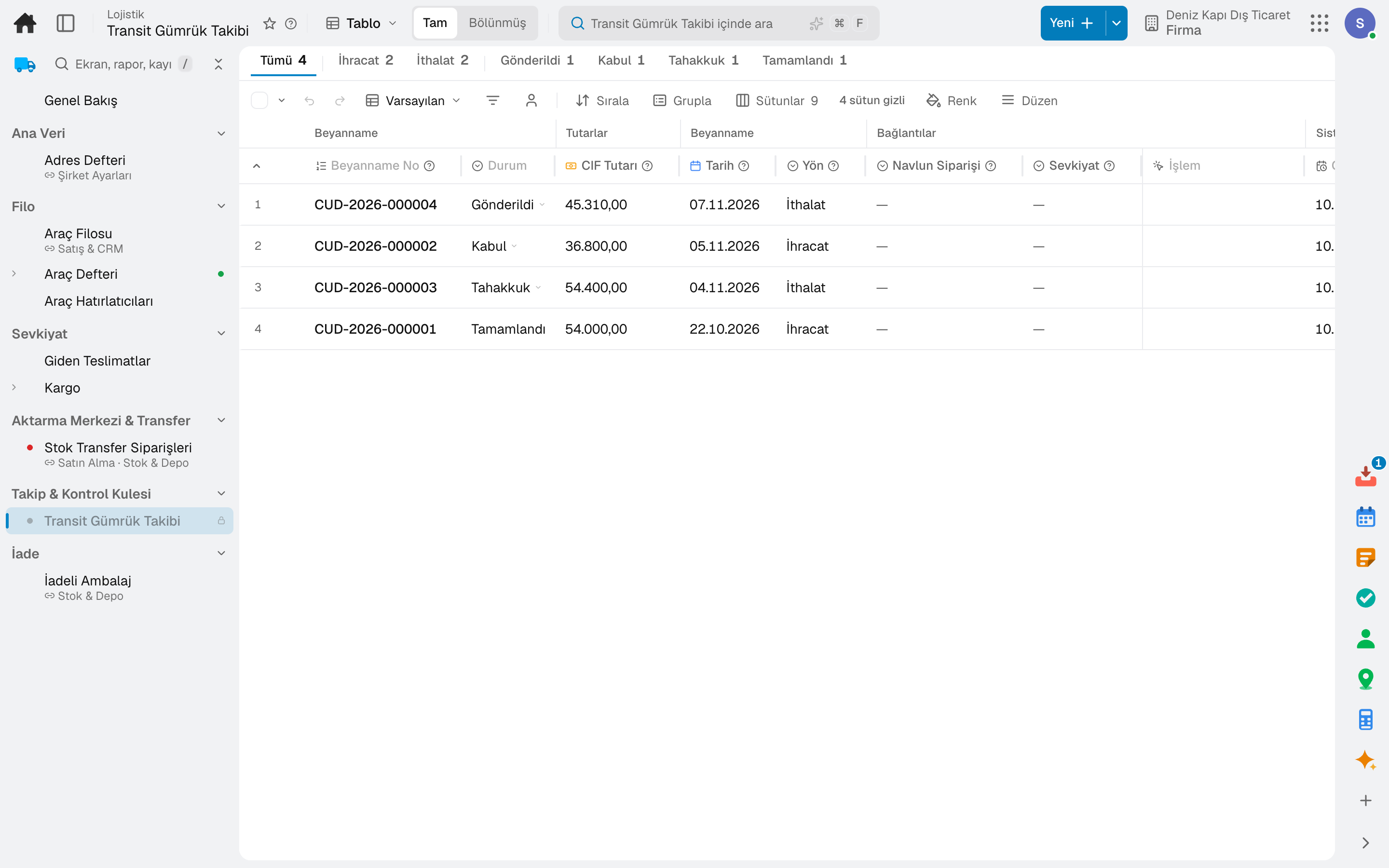
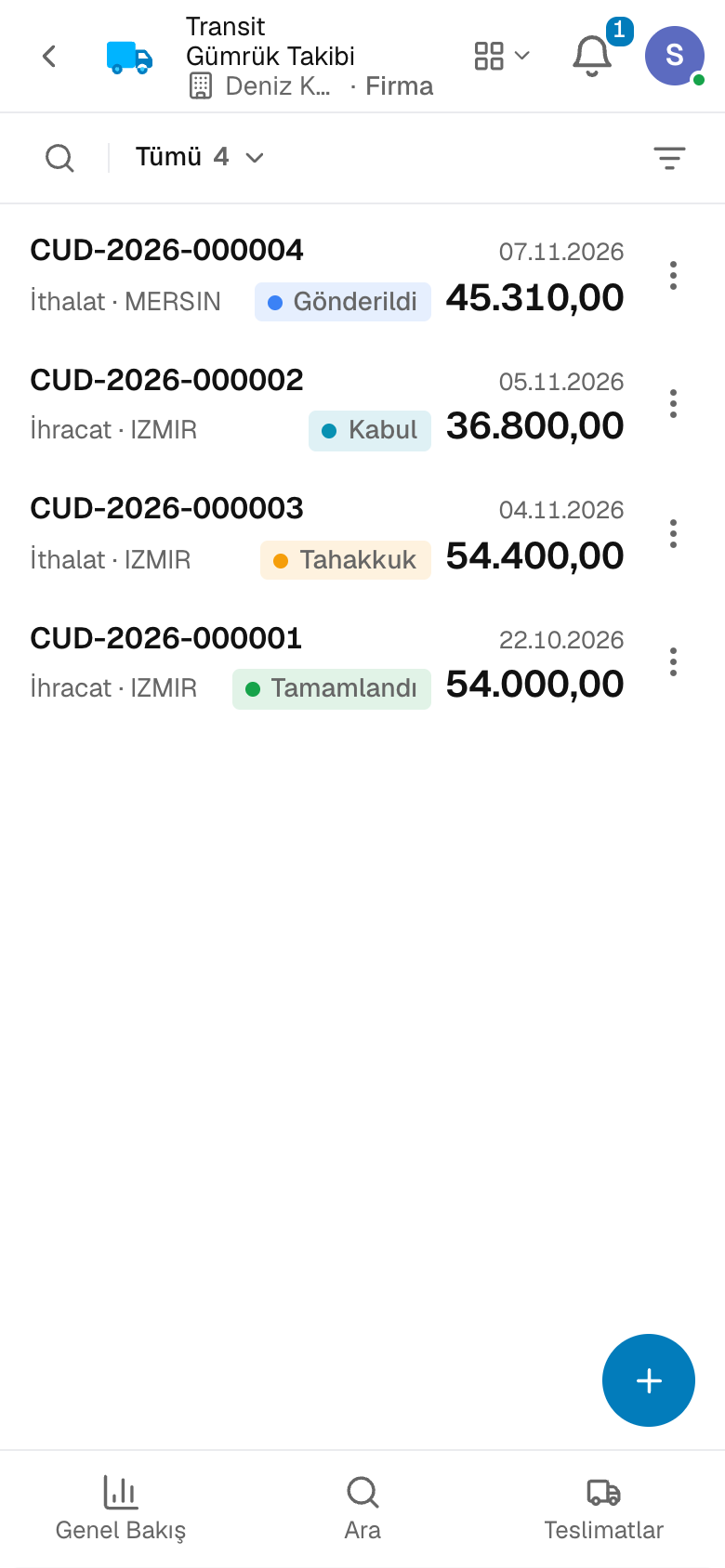
The declaration's master record lives in customs declarations; the transit record only selects it.
Submitted, accepted or rejected, assessed and completed.
The transit's latest arrival date and customs seal are tracked on the linked declaration; closing requires arrival confirmation.
The CIF amount, customs duty and VAT are recorded with their currency.
06 / 07
Import and export letters of credit are tracked with bank, amount, tolerance and dates; amendments, document presentations, payments and charges are recorded.
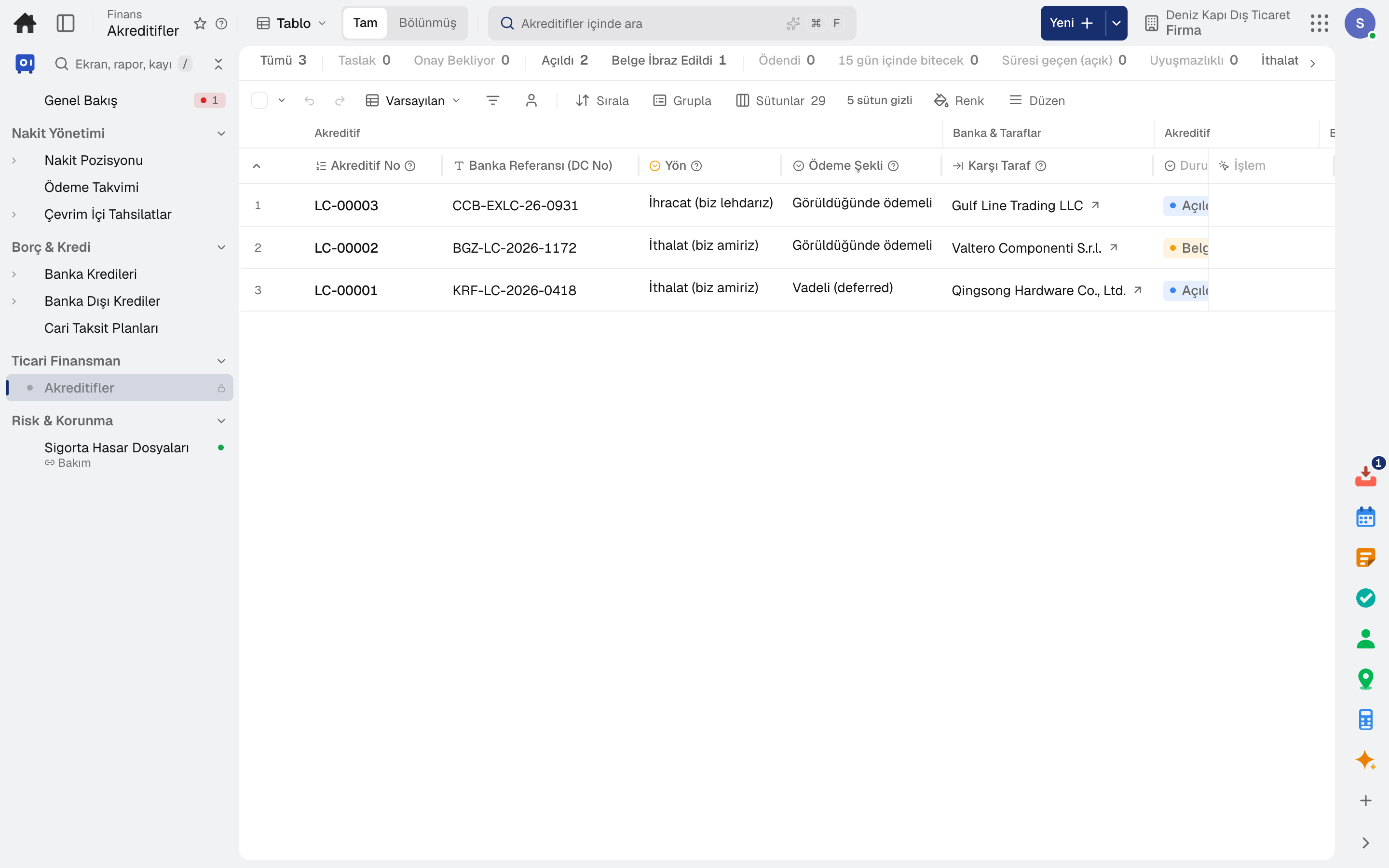
Direction, payment type (at sight, deferred, acceptance), bank, counterparty, amount and currency, tolerance, latest shipment and expiry, delivery term, required documents.
A change in amount, expiry or latest shipment date is kept as an amendment confirmed by the bank.
Late presentation and documents exceeding the open amount are flagged as discrepancies automatically; those reported by the bank are entered by hand.
An open import letter of credit uses the bank's non-cash credit limit and releases it on closing.
A letter of credit opens after approval; latest shipment, expiry and acceptance due dates appear in the calendar and as tasks.
Opening and confirmation commissions are posted to accounting and, for imports, added to the cost of the goods.
07 / 07
Letters of guarantee obtained from the bank or given to a counterparty are recorded; memorandum entries, commission periods, returns and claims are tracked.
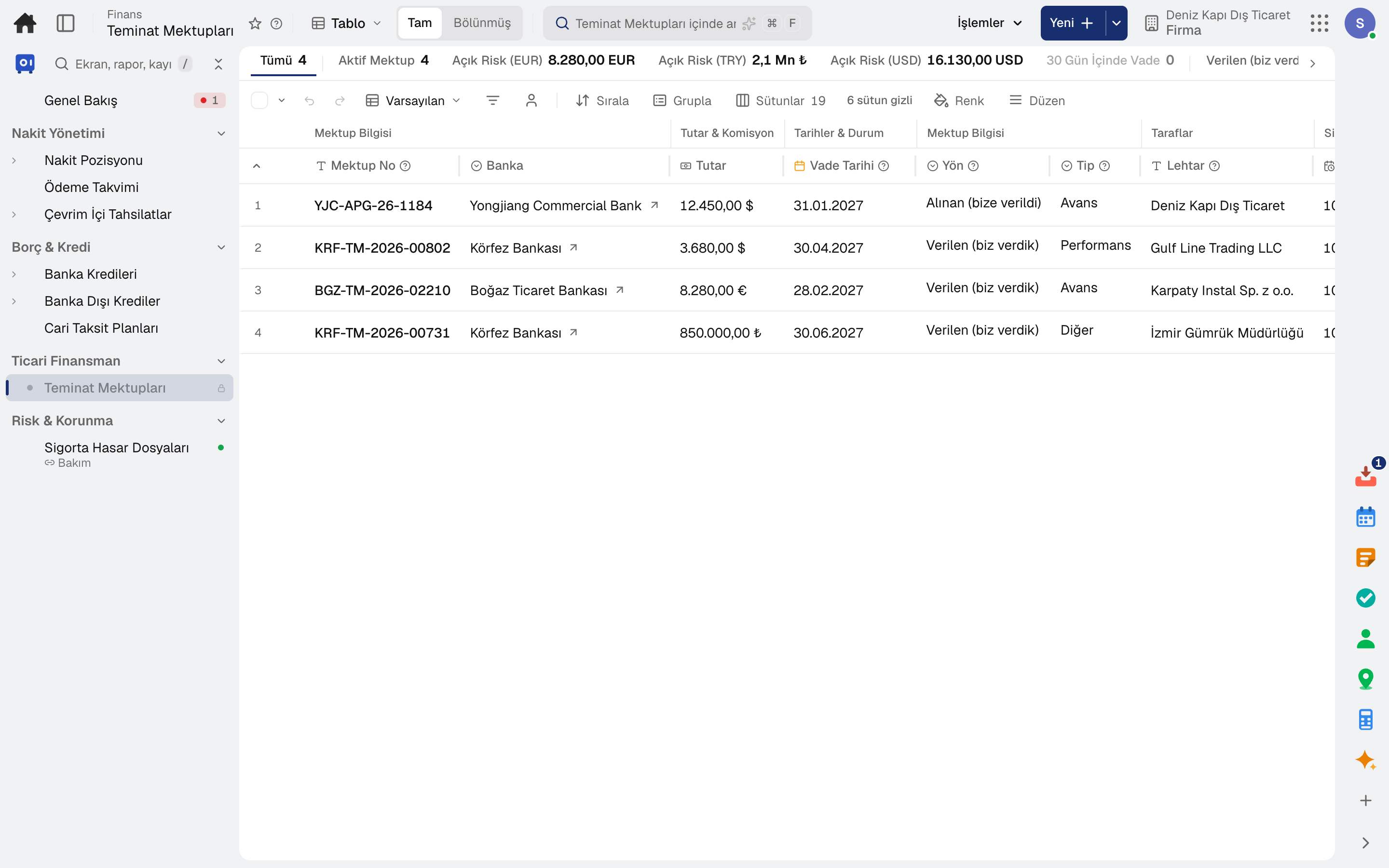
Final, bid, advance payment and performance guarantees; beneficiary, bank, amount, currency and maturity.
Open guarantee amounts are shown by currency, and those maturing within 30 days are counted separately.
Commission is split into quarterly, semi-annual or annual periods and lands on the payment calendar.
The guarantee is tracked in memorandum accounts and closed on return or claim.
An issued guarantee uses the bank's non-cash credit limit.
In the package
All on the same data model: a record entered in one module is never re-entered in another. The other 19 modules are open in your account too.
Your own fleet and your carriers in one control tower.
11 sub-modulesPurchasing software
From requisition to invoice, every purchase approved and traceable.
10 sub-modulesSales and customer management software
One customer record from opportunity to invoice.
16 sub-modulesCash and finance management software
See your cash today, and next week from today.
6 sub-modulesAccounting software
In the journal the moment the invoice is issued; no waiting for month end.
13 sub-modulesTry it free for 15 days; no credit card needed. We reply to your questions within one business day.